
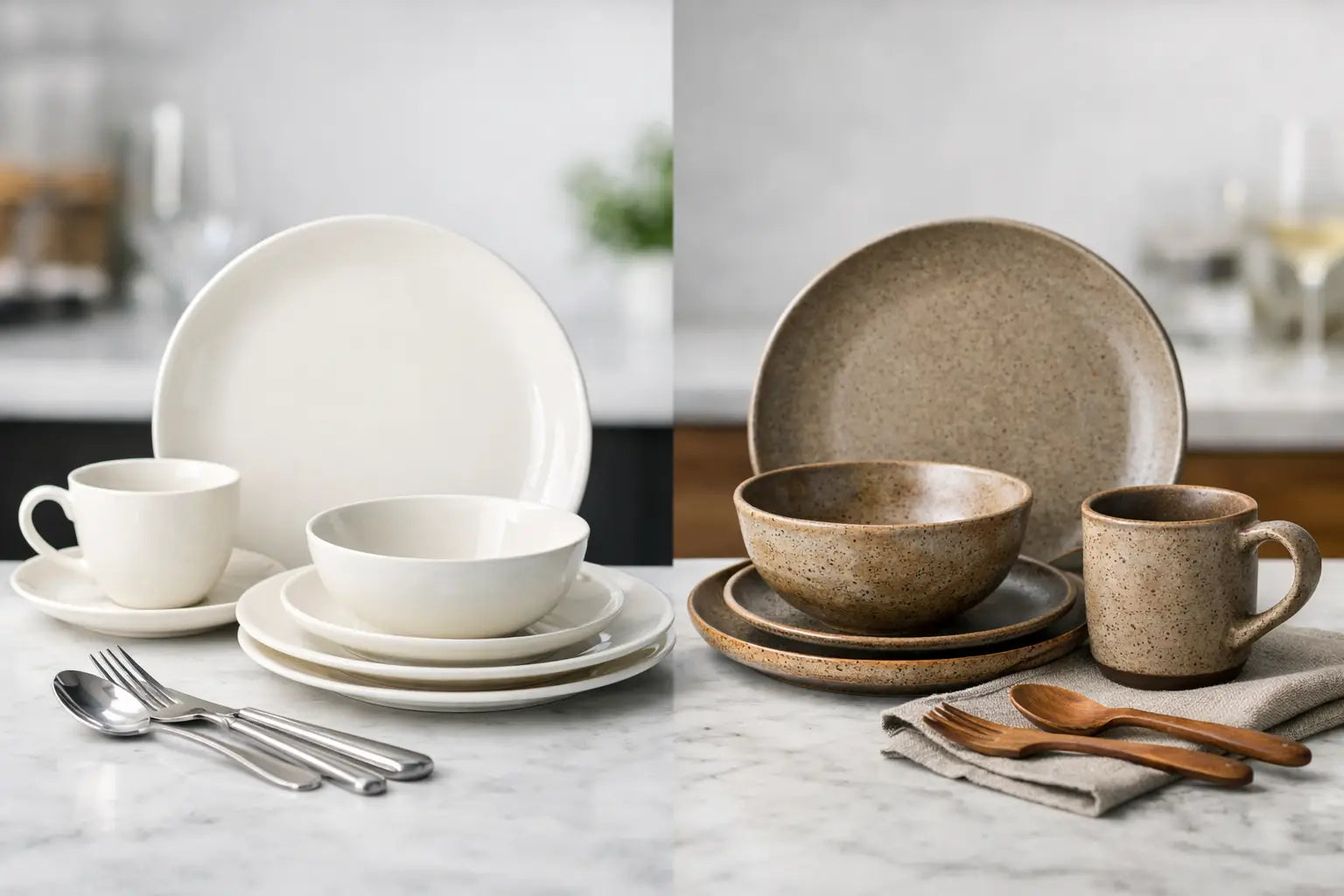
Ceramic vs Stoneware Dinner Sets
A dinner set does more than serve a meal. It sets the mood for slow breakfasts, midweek suppers and the kind of table that feels welcoming before anything is plated. When choosing between ceramic vs stoneware dinner sets, the difference is not simply technical. It shapes how your table looks, how each piece feels in the hand, and how easily it fits into everyday life.
For some homes, the right answer is softness, lightness and a more delicate finish. For others, it is substance, texture and that grounded, artisanal feel that makes even a simple meal look thought-through. Both can be beautiful. The key is knowing which one suits your routine, your cupboards and your style of hosting.
Ceramic vs stoneware dinner sets: what is the difference?
Ceramic is a broad term used for pieces made from clay and hardened by heat. Stoneware sits within that family, but it is fired at a higher temperature and becomes denser as a result. In practical terms, this means all stoneware is ceramic, but not all ceramic dinnerware is stoneware.
That distinction matters because it affects both appearance and performance. Standard ceramic dinner sets often have a smoother, lighter feel and can lean more refined or decorative in finish. Stoneware tends to feel weightier, with a more tactile quality and a slightly more organic character. If you are drawn to natural-inspired interiors, stoneware often sits especially well within that look, thanks to its earthy tones, softly speckled glazes and gentle irregularities.
Still, ceramic should not be dismissed as the more fragile option by default. Some ceramic sets are perfectly suited to everyday use. The difference is less about one being universally better and more about what kind of homeware experience you want at the table.
How ceramic dinner sets look on the table
Ceramic dinner sets often appeal to anyone who prefers a cleaner, lighter visual finish. They can bring a sense of freshness to the table, particularly in softer neutrals, warm whites and muted seasonal shades. If your styling leans classic, pared-back or slightly more polished, ceramic can feel quietly elegant without becoming formal.
This makes ceramic a strong choice for homes where versatility matters. A simple ceramic set can move easily from everyday family meals to a dressed table with candles, linen and layered serving pieces. It tends to suit those who like their tableware to feel understated and easy to style around.
Ceramic also works well if you prefer less visual weight. In open shelving or glazed cabinets, lighter-looking pieces help a kitchen feel calm rather than crowded. That can be especially useful if you are building a cohesive look with neutral accessories and want your dinnerware to blend rather than dominate.
Why stoneware feels so popular now
Stoneware has become a favourite for good reason. It has a relaxed, refined quality that suits the way many people want their homes to feel now - comfortable, thoughtful and softly styled rather than overly formal. A stoneware dinner set often has subtle variation in glaze, slight tonal depth and a handmade feel that brings warmth to the table.
That warmth is what makes it so appealing in everyday settings. A simple pasta dish or slice of cake can feel more inviting on stoneware because the table itself has texture and presence. If you like layered place settings, woven placemats, linen napkins and natural centrepieces, stoneware tends to bring everything together with very little effort.
It is also well suited to transitional styling across the seasons. In spring it can look fresh with soft florals and pale linens. In autumn it sits naturally alongside richer textures, candlelight and deeper earthy tones. For a brand like Sable Homeware, where timeless styling matters more than passing trends, that versatility is part of the appeal.
Durability in everyday use
If durability is high on your list, stoneware usually has the edge. Because it is fired at a higher temperature, it is generally harder and less porous than many standard ceramic pieces. That makes it a reliable choice for busy households, regular use and tables that need to look good without feeling too precious.
This does not mean ceramic dinner sets are impractical. Many are made for daily dining and hold up well when treated with normal care. But if your home includes young children, frequent entertaining or a tendency for plates to be stacked and moved often, stoneware may offer a little more reassurance.
The trade-off is weight. Stoneware plates and bowls tend to be heavier, which some people love because it feels substantial and high quality. Others find it less comfortable, especially when lifting stacks from cupboards or loading the dishwasher. If ease matters as much as resilience, that is worth considering before you choose.
Weight, storage and daily comfort
This is the part many shoppers overlook. A dinner set might look beautiful in product images, but how it feels in real life matters just as much. Ceramic is often lighter, which can make it easier to carry, wash and store. If you have narrower shelving, smaller kitchen cupboards or simply prefer pieces that feel effortless to handle, ceramic may suit you better.
Stoneware brings a lovely sense of substance, but it does take up a little more physical and visual space. In a compact kitchen, a full stoneware set can feel bulkier than expected. If you enjoy the look of stacked crockery on open shelves, that may not be a drawback. In fact, it can add to the layered, styled feel. But in practical terms, it is worth thinking through how often you will move it and where it will live.
Which suits your style best?
The choice between ceramic vs stoneware dinner sets often comes down to the atmosphere you want to create.
If your taste leans towards soft refinement, clean silhouettes and a table that feels bright and quietly classic, ceramic may be the better fit. It supports a more polished look and pairs beautifully with simple glassware, crisp linens and restrained styling.
If you prefer texture, warmth and a table that feels relaxed but put-together, stoneware is often the more natural choice. It works particularly well in homes shaped by neutral palettes, organic materials and a slower, more grounded approach to decorating.
Neither is more timeless than the other when chosen well. Timelessness usually comes from colour, shape and finish rather than material alone. Soft white, oat, taupe, sage and stone-inspired glazes tend to age far better than anything overly glossy or heavily patterned.
Ceramic vs stoneware dinner sets for hosting
For hosting, both materials can work beautifully, but they create slightly different moods. Ceramic can feel elegant and adaptable, especially if you like changing your table styling for different occasions. It acts as a gentle canvas, allowing seasonal details to stand out.
Stoneware tends to create atmosphere almost instantly. Even a simple supper can feel more styled because the pieces themselves have depth and character. That is helpful if you want an effortlessly pulled-together table without relying on lots of extra layers.
There is also the question of formality. Ceramic often reads a little smarter, while stoneware feels more relaxed. If your entertaining style is candlelit but casual, generous rather than formal, stoneware often feels especially at home.
What to check before you buy
Beyond the material itself, a few small details will shape how happy you are with your set. Look at the rim shape, because wide rims can feel more traditional while coupe-style plates often look more contemporary. Notice the glaze finish too. Matte and semi-matte finishes usually feel softer and more natural, while high gloss can appear crisper and brighter.
It is also worth checking whether each piece is dishwasher and microwave safe, and whether slight variation is intentional. With stoneware in particular, tonal changes and gentle irregularities are often part of the charm rather than flaws. If you love a more uniform look, ceramic may feel easier to live with.
Think, too, about what you actually use. A beautiful 16-piece set is only helpful if the bowls are deep enough for your usual meals and the side plates are a size you will reach for often. The most successful dinnerware is not just attractive. It fits naturally into your day.
The right choice is the one you will enjoy using
If you want lightness, versatility and a cleaner finish, ceramic is often the better choice. If you want durability, texture and a more grounded aesthetic, stoneware usually comes out ahead. The better material is the one that feels right in your hands, suits your home and makes everyday meals feel a little more special.
A dinner set should never feel like a purely practical purchase. It becomes part of your routines, your gatherings and the visual rhythm of your home. Choose the one that invites you to lay the table a little more often, even when the meal itself is beautifully simple.