How to Style a Breakfast Tray Beautifully
A breakfast tray can so easily feel like an afterthought - a mug, a plate, perhaps a napkin folded in a hurry. Yet with a little intention, it becomes one of those small styling moments that makes home feel softer, calmer and more cared-for. If you have ever wondered how to style a breakfast tray in a way that feels natural rather than overdone, the secret is less about adding more and more about choosing pieces that work quietly together.
The most inviting trays have a sense of balance. They feel useful first, but still beautiful enough to set a mood. Whether you are dressing a tray for a slow weekend breakfast, a guest bedroom, or simply adding a styled touch to your kitchen island, the best arrangements combine practicality, texture and restraint.
Start with the tray itself
Before thinking about cups, bowls or finishing details, begin with the foundation. The tray sets the tone for everything that follows, so material and shape matter. A wooden tray in a soft natural tone brings warmth and ease. Rattan and woven styles feel relaxed and textural. A painted tray in an understated neutral can look slightly more refined, especially if the rest of your scheme is very soft and tonal.
Size is just as important as finish. A tray that is too small can look crowded very quickly, while one that is too large may feel sparse unless you are styling it as more of a centrepiece. For a breakfast setting, aim for enough room to hold the essentials with a little breathing space around them. That negative space is what keeps the arrangement feeling calm.
Handles can be useful, especially if the tray is genuinely being carried from kitchen to bedroom or garden room. If it is mostly decorative, a cleaner silhouette may feel more elegant. It depends on whether the tray is for everyday living, occasional hosting, or a blend of both.
How to style a breakfast tray with layers
The easiest way to make a breakfast tray feel thoughtful is to build it in soft layers. This does not mean piling on accessories. It means creating gentle contrast so each piece has presence.
Start with a textile base if it suits the look. A folded linen napkin under a bowl, beside a cup, or draped slightly beneath a plate adds softness straight away. It also stops harder materials such as ceramic and wood from feeling flat together. Choose natural fabrics in whites, oat tones, muted greens or warm stone shades for a look that feels timeless rather than seasonal-only.
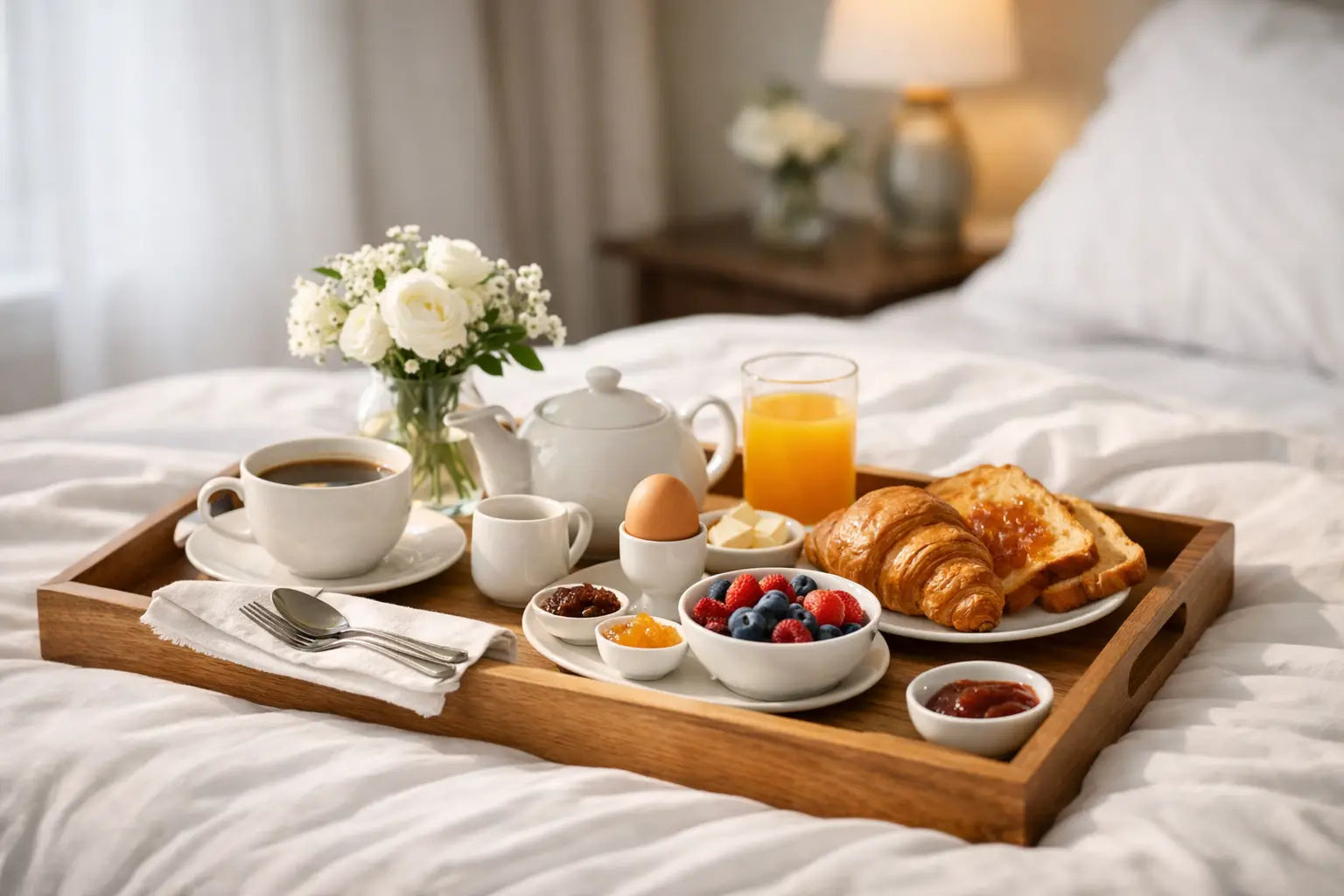
Then add your crockery. A simple mug, a small plate, a bowl for fruit or yoghurt, and perhaps a little pot for jam or butter often feels complete enough. If every item is the same tone, the tray can look elegant and serene, though sometimes it helps to introduce one subtle point of contrast through a darker mug, a ribbed bowl or a woven coaster.
The final layer is the detail that makes the tray feel styled rather than merely assembled. This might be a small bud vase, a candle, a spoon resting on a tiny dish, or a folded paper for a slower morning. One or two details are enough. Once there are too many decorative touches, the tray starts to lose its usefulness.
Keep the arrangement practical
A beautiful tray still needs to function. That is often where styling goes wrong. It can be tempting to make everything symmetrical and neat, but breakfast is naturally a little relaxed, and the arrangement should allow for that.
Place the largest item first, usually the plate or bowl, then build around it. Set the mug where it feels secure and easy to reach, rather than squeezed into a corner. If you are including a small jug, glass or condiment pot, group those pieces together so the tray feels visually anchored on one side rather than scattered.
Odd numbers often work well when styling, but practicality matters more than any rule. If two croissants on a plate look right, leave it at two. If a tray needs a knife, spoon and side plate, include them without trying to force a more minimal look. The aim is ease, not perfection.
Use texture to create warmth
When people think a breakfast tray looks inviting, texture is usually the reason. Not because they notice it immediately, but because it softens the whole scene.
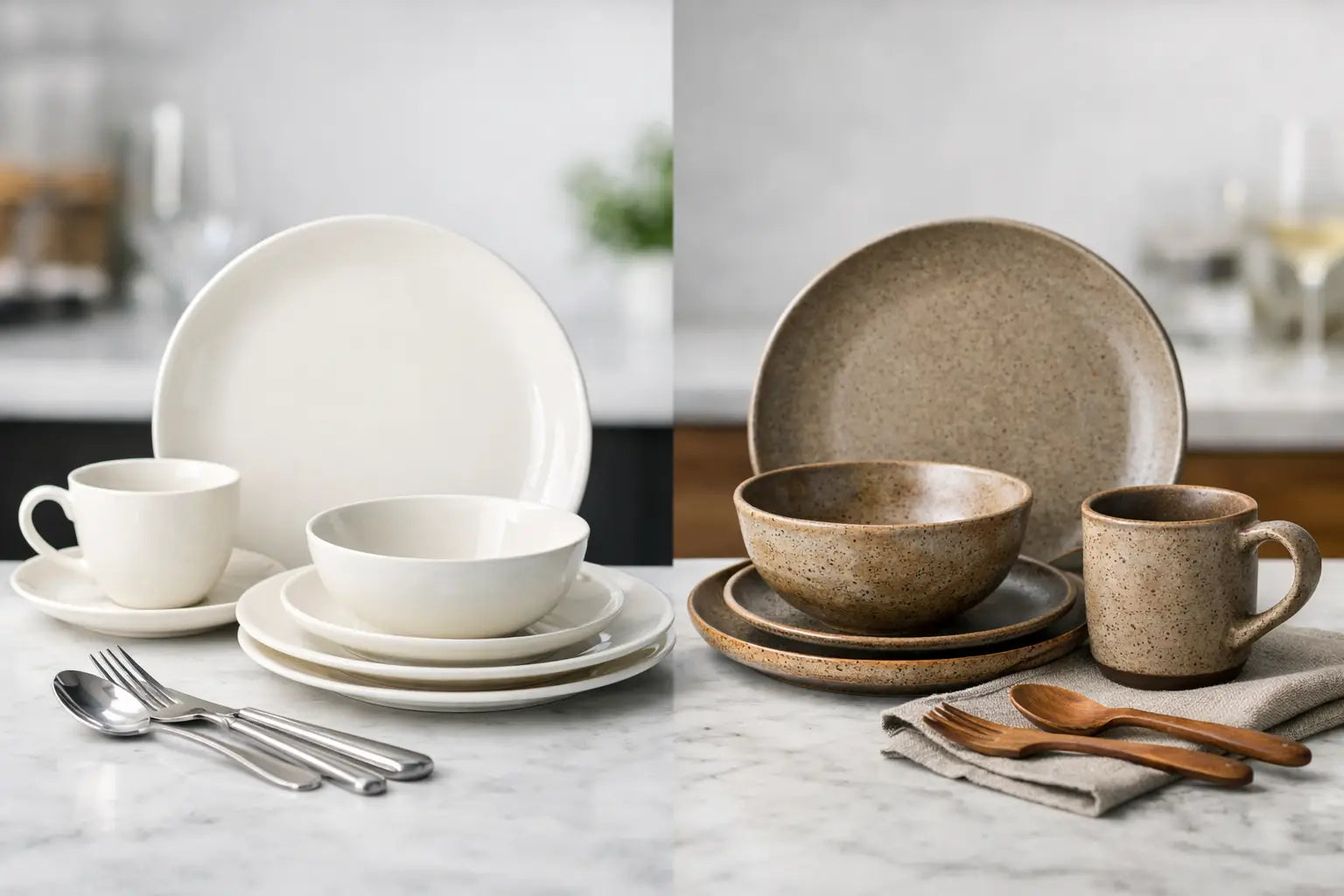
Wood, linen, stoneware, woven placemats and lightly speckled ceramics all bring a gentler finish than anything too glossy or overly polished. Mixing textures keeps neutral styling from becoming bland. A smooth cup beside a woven tray, or a crisp napkin next to a rustic bowl, gives the eye something to settle on.
This is particularly useful if your home already leans towards soft neutrals. In a palette of cream, beige, taupe and muted grey, texture creates depth without disturbing the calm. It is one of the reasons timeless pieces tend to work harder than trend-led ones. They layer more easily and can move between seasons without looking out of place.
Add one natural element
If you want the tray to feel complete, include something living or nature-inspired. A single stem in a bud vase, a small posy of faux florals, or even a cut sprig of greenery can lift the entire arrangement.
The key is scale. A breakfast tray does not need a full bouquet. One delicate element is often far more effective, especially if you are working with a smaller tray. It adds freshness without competing with the food and tableware.
Season can guide this choice. In spring, softer greens and blossom tones feel light and airy. In autumn, a more muted stem or berry detail adds warmth. Through winter, evergreen touches or subtle whites can keep the look feeling clean and calm. The tray should still feel in keeping with the rest of your home rather than dressed for a separate occasion.
Choose a colour palette and stay with it
One of the simplest answers to how to style a breakfast tray is to treat it like any other small surface in the home. Limit the palette, repeat tones, and avoid anything that feels visually noisy.
That does not mean everything must match. In fact, matching too closely can feel a little flat. Instead, work within a close family of colours. Soft white, sand, oat, stone and muted sage pair beautifully and leave room for natural materials to shine. If you prefer slightly more contrast, add touches of charcoal, walnut or deep olive through one or two accents.
Patterns can work, but keep them restrained. A subtle stripe on a napkin or a gently scalloped plate edge can add interest without overwhelming the tray. Strong prints and bright colours may suit some interiors, but in a calmer home they can quickly make the arrangement feel disconnected.
Style for the setting, not just the tray
A breakfast tray does not exist in isolation. It sits on a bed, an ottoman, a kitchen table or a garden chair, and that setting shapes how it should look.
For a bedroom tray, softness matters more. Linen, a small vase and perhaps a candle or hand cream beside a coffee and pastry can feel especially thoughtful. In the kitchen, the look can be cleaner and more functional, with a jug, toast rack or fruit bowl taking the lead. If you are styling a tray for guests, include thoughtful extras such as a folded napkin, a teaspoon and a small glass of juice so it feels welcoming without becoming formal.
This is also where scale comes back in. On a large bed, a small tray may feel a little lost unless it has enough height or texture to hold its own. On a compact breakfast table, a simpler tray often works better.
How to style a breakfast tray for everyday use
For everyday mornings, simplicity is what makes a tray feel sustainable. You want something you can recreate without needing ten minutes of rearranging.
Choose a core set of pieces that naturally work together - perhaps a favourite mug, a neutral plate, a linen napkin and a small bowl. Keep them nearby so styling becomes second nature. A tray that always looks lovely but is awkward to use will soon end up in a cupboard.
This is where a consistent collection really pays off. When pieces share a similar tone, material and mood, they are much easier to combine at short notice. Sable Homeware’s approach to timeless textures and soft neutrals suits this kind of styling well, because it allows even practical everyday moments to feel a little more special.
Let it feel lived-in
The most beautiful breakfast trays are not overly arranged. They have enough structure to feel intentional, but enough ease to feel real. A croissant slightly off-centre, a casually folded napkin, a teaspoon resting beside a cup - these details often look better than anything too precise.
If something feels crowded, remove one item. If it looks flat, add texture rather than more colour. If it seems too formal, loosen the arrangement slightly. Styling is often a matter of adjusting until the tray feels settled.
A breakfast tray is a small thing, but small things shape the mood of a home. When it is layered with warmth, natural texture and a little restraint, it turns an ordinary morning into something quieter and more deliberate. Sometimes that is all a beautiful space really needs.