What Home Accessories Make a Room Warmer?
A room can have good furniture, a sensible layout and plenty of natural light, yet still feel slightly cold. Usually, the difference comes down to the finishing layers. If you have been asking what home accessories make a room warmer, the answer is rarely one dramatic piece. Warmth is created through texture, tone, softness and the quiet details that make a space feel lived in and welcoming.
The most inviting interiors do not feel overloaded. They feel deliberate. A few well-chosen accessories can soften hard edges, balance empty corners and give a room that settled, comfortable quality many people want but struggle to define.
What home accessories make a room warmer in practice?
The short answer is accessories that add softness, variation and a sense of ease. Rooms tend to feel colder when every surface is flat, shiny or bare. They feel warmer when materials have depth, colours sit in a gentle palette, and styling creates a more layered view.
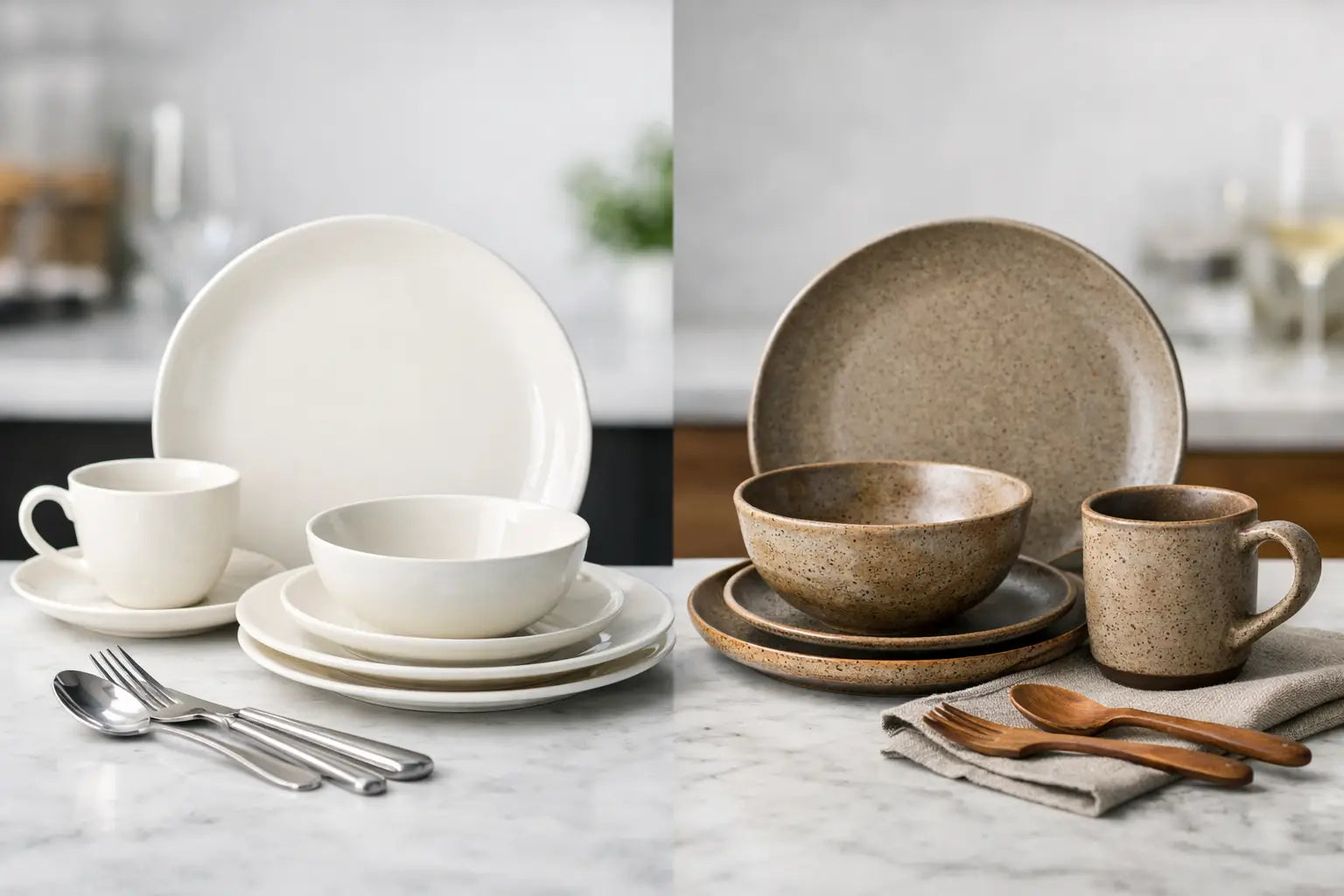
This is why natural textures are often the first place to start. Linen, rattan, ceramic, wood, glass and soft faux florals all introduce a quieter kind of richness than anything overly glossy or heavily decorated. They do not demand attention, but they do make a room feel more complete.
Warmth is also visual, not only physical. A room does not need to be filled with thick fabrics and dark colours to feel cosy. In fact, for homes that lean towards a lighter, neutral style, too much heaviness can work against the calm atmosphere. The goal is to add depth without losing airiness.
Start with texture before colour
When a room feels stark, many people assume they need deeper paint shades or bolder accessories. Sometimes that helps, but texture usually has a bigger effect. It gives the eye more to settle on and stops a scheme from feeling flat.
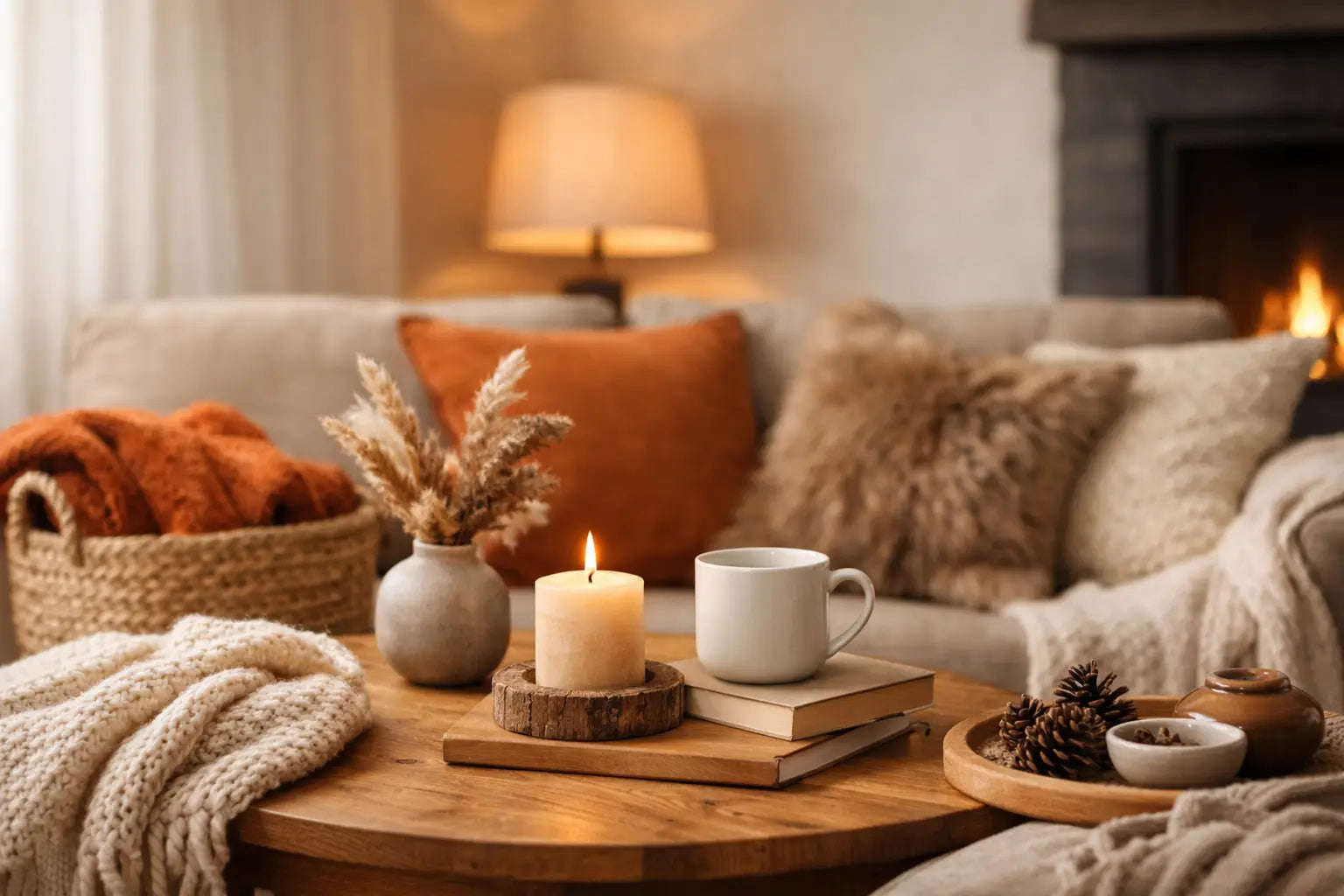
Cushions are one of the easiest examples. A sofa with plain upholstery can feel noticeably warmer with a few cushions in washed linen, boucle, cotton or softly woven fabric. The key is variation rather than excess. Two or three cushions in related tones often look more refined than a large pile in competing prints.
Throws do something similar, particularly in living rooms and bedrooms. Draped lightly over the arm of a chair or folded across the end of a bed, they introduce softness in a way that feels effortless. Choose textures that look tactile rather than slippery or overly formal.
Rugs are another quiet essential. If flooring is hard, whether wood, tile or laminate, a rug helps anchor the room and reduce that echo of visual coldness. Even a subtle neutral rug can make a seating area feel more intimate. In open-plan spaces, this matters even more because rugs help define zones and make each one feel purposeful.
Lighting changes everything
Few accessories affect atmosphere as quickly as lighting. Overhead lights are practical, but they rarely create warmth on their own. A room usually feels more comfortable when light comes from different levels.
Table lamps are especially useful because they soften the room in the evening and add shape to sideboards, consoles and bedside tables during the day. Ceramic bases, textured finishes and fabric shades tend to feel gentler than anything too metallic or stark.
Candles also hold their own, even when they are not lit. A cluster of candle holders or a well-placed lantern adds a sense of ritual and calm. When lit, candlelight creates the kind of soft movement that instantly makes a room feel more welcoming. If you enjoy seasonal styling, this is one of the easiest ways to shift the mood from spring freshness to autumn comfort without redesigning the whole space.
It is worth thinking about glow rather than brightness. A very bright bulb can make beautiful accessories feel clinical. Warmer bulbs and layered lighting usually flatter both the room and the objects within it.
Decorative pieces that soften a scheme
Some accessories warm a room not because they are soft, but because they break up emptiness. Shelves, coffee tables and consoles can look cold when left too bare or arranged with only practical objects.
Vases are one of the most versatile styling pieces for this reason. A ceramic vase in a chalky neutral or earthy tone adds shape and substance, even before you add stems. Grouped with a candle, a small stack of books or a decorative bowl, it helps create a more finished moment.
Faux florals and greenery are equally effective. They bring an organic quality that can soften even the cleanest interior. The best arrangements do not need to be oversized. A few thoughtfully chosen stems in a simple vase often feel more timeless than a large, highly styled display. Wreaths can have a similar effect, not only at Christmas but throughout the year, especially in natural materials and muted palettes.
Decorative bowls, trays and lidded storage also help because they combine beauty with order. Clutter makes a room feel restless, but a completely empty surface can feel impersonal. A tray on a coffee table or ottoman gives everyday items a clear home and creates a more composed look.
Use warm neutrals rather than harsh contrast
If your room already leans neutral, the wrong accessories can still make it feel cold. This usually happens when the palette is too grey, too sharp or too one-note. The solution is not necessarily more colour. Often it is a better mix of warm neutrals.
Think oat, stone, sand, putty, taupe and soft brown rather than bright white and cool grey alone. These shades feel grounded and restful, and they work beautifully with natural materials. Black accents can still be useful for contrast, but too much can make a soft room feel harder.
This is where ceramics, textiles and seasonal accessories can quietly do the work. Swapping in pieces with a warmer undertone gives the whole room a gentler feel. It is a subtle shift, but an effective one.
Styling in layers makes a room feel lived in
A warm room nearly always has some layering. Not clutter, and not constant decoration, but visual depth. This is often what separates a room that looks finished from one that feels temporary.
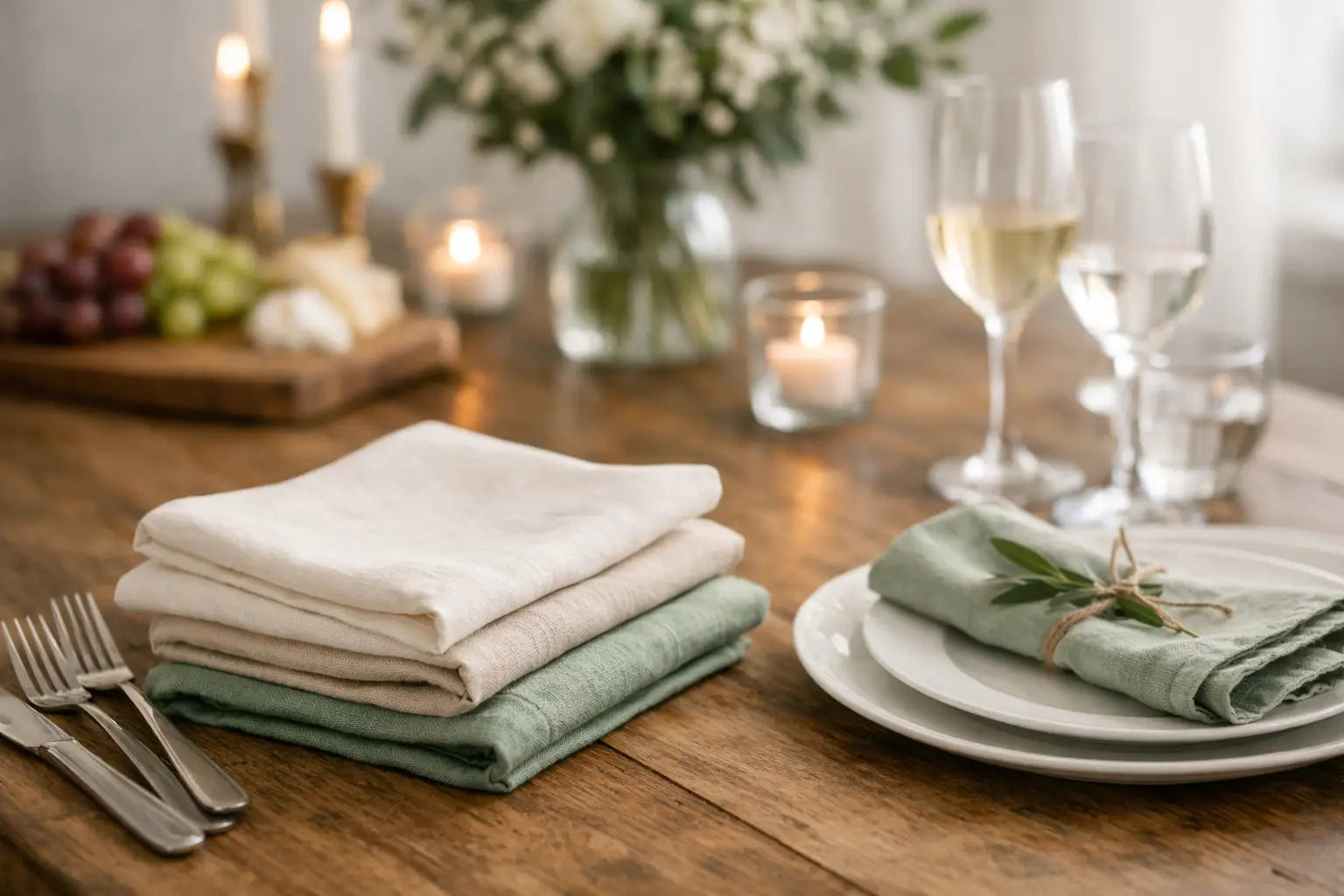
On a coffee table, that might mean a tray, a candle and a small vase rather than a single lonely object. On a shelf, it could be a mixture of heights and textures, such as a ceramic piece beside a woven basket or a stem arrangement near stacked books. On a dining table, a runner, candle holders and a central vessel can make everyday meals feel more inviting without becoming fussy.
There is a balance to strike. Too many accessories can make a room feel busy, which is not the same as warm. If you prefer a calmer look, choose fewer pieces with more texture and presence. A large vessel, a substantial lantern or a softly draped throw often achieves more than several small decorative fillers.
The rooms that benefit most from warming accessories
Living rooms are the obvious starting point, but hallways, kitchens and bedrooms often need just as much attention. An entryway can feel particularly stark without a console arrangement, a mirror, a lamp or a wreath to soften the arrival home.
Kitchens benefit from warmth too, especially if they have hard surfaces and simple cabinetry. A bowl of faux pears, a wooden board leaned against a splashback, a ceramic utensil pot or a softly glowing candle can make the room feel less utilitarian.
Bedrooms respond beautifully to layered accessories because comfort is already part of the purpose. Cushions, throws, bedside lamps and gently styled surfaces all help create a more restful atmosphere. The trick is to keep the palette quiet so the room remains calm.
Choosing accessories that feel timeless
Trends can bring inspiration, but warmth lasts longer when the accessories feel enduring. Pieces in natural materials, soft finishes and versatile shapes tend to move easily between seasons and still look relevant next year.
That is often why a coordinated collection feels easier to style than trend-led impulse buys. When accessories share a similar visual language, the room comes together with less effort. A collection of thoughtful pieces in complementary tones will always feel warmer than a mix of disconnected items, however stylish each one may be on its own.
If you are updating gradually, start with the accessories that change atmosphere most noticeably: lighting, textiles and one or two decorative focal points. Once those are in place, smaller additions can build on the mood rather than trying to create it from scratch.
A warmer room does not need to be darker, busier or filled with more things. Usually, it simply needs softer layers, natural texture and accessories chosen with a little more intention. When each piece adds calm as well as character, the whole space begins to feel gentler, more welcoming and far more like home.