Article: Linen Napkins for Entertaining at Home
Linen Napkins for Entertaining at Home
Some table details change the whole mood without asking for attention. Linen napkins for entertaining do exactly that. They soften a place setting, bring texture to the table, and make even a simple supper feel thought-through rather than hurried.
That shift matters when you want guests to feel at ease. A table can be beautiful without feeling formal, and linen has a way of creating that balance. It looks refined, but never overdone. It feels natural, relaxed and welcoming, which is often exactly what good entertaining needs.
Why linen napkins for entertaining feel so timeless
There is a reason linen returns again and again in well-dressed homes. It has an easy elegance that does not rely on shine, pattern or novelty. The fabric carries a gentle texture that adds depth to a table, particularly when layered with ceramics, glassware and softly toned serving pieces.
Unlike paper napkins, linen feels intentional. It suggests you have thought about the experience as a whole, not just the food. Yet it is not stiff or precious. In fact, part of linen’s appeal is that a few natural creases only make it look better. That slightly relaxed finish keeps the table from feeling too polished.
For homes shaped around calm, understated interiors, linen fits naturally. Neutral shades such as ivory, oat, stone and soft grey work across seasons and occasions, making them useful rather than decorative for one specific moment. If your style leans towards warmth and simplicity, linen napkins often become one of those pieces you reach for again and again.
The difference a fabric napkin makes
Entertaining is often less about grand gestures and more about atmosphere. Lighting, serving dishes, flowers and table linens all play a part. A fabric napkin may seem like a small detail, but it changes how the table is perceived.
It gives each place setting a finished quality. Even when the menu is uncomplicated, perhaps a roast lunch, a seasonal supper or drinks with a few sharing plates, the table feels more settled and complete. Fabric also adds softness among harder surfaces such as wood, stoneware and cutlery, which helps the overall setting feel more layered.
There is a practical side too. Linen is durable, washable and suitable for repeated use, so it often feels like a better long-term choice than buying disposable options for every gathering. That said, it depends on the kind of hosting you do. For a large children’s party or a particularly casual garden gathering, paper may still be the easier answer. Linen works best when you want the table to feel a touch more special.
Choosing the right linen napkins for your table
The best linen napkins are usually the ones that sit quietly within the wider scheme of your home. Rather than choosing something overly decorative, it often helps to think in terms of tone, texture and versatility.
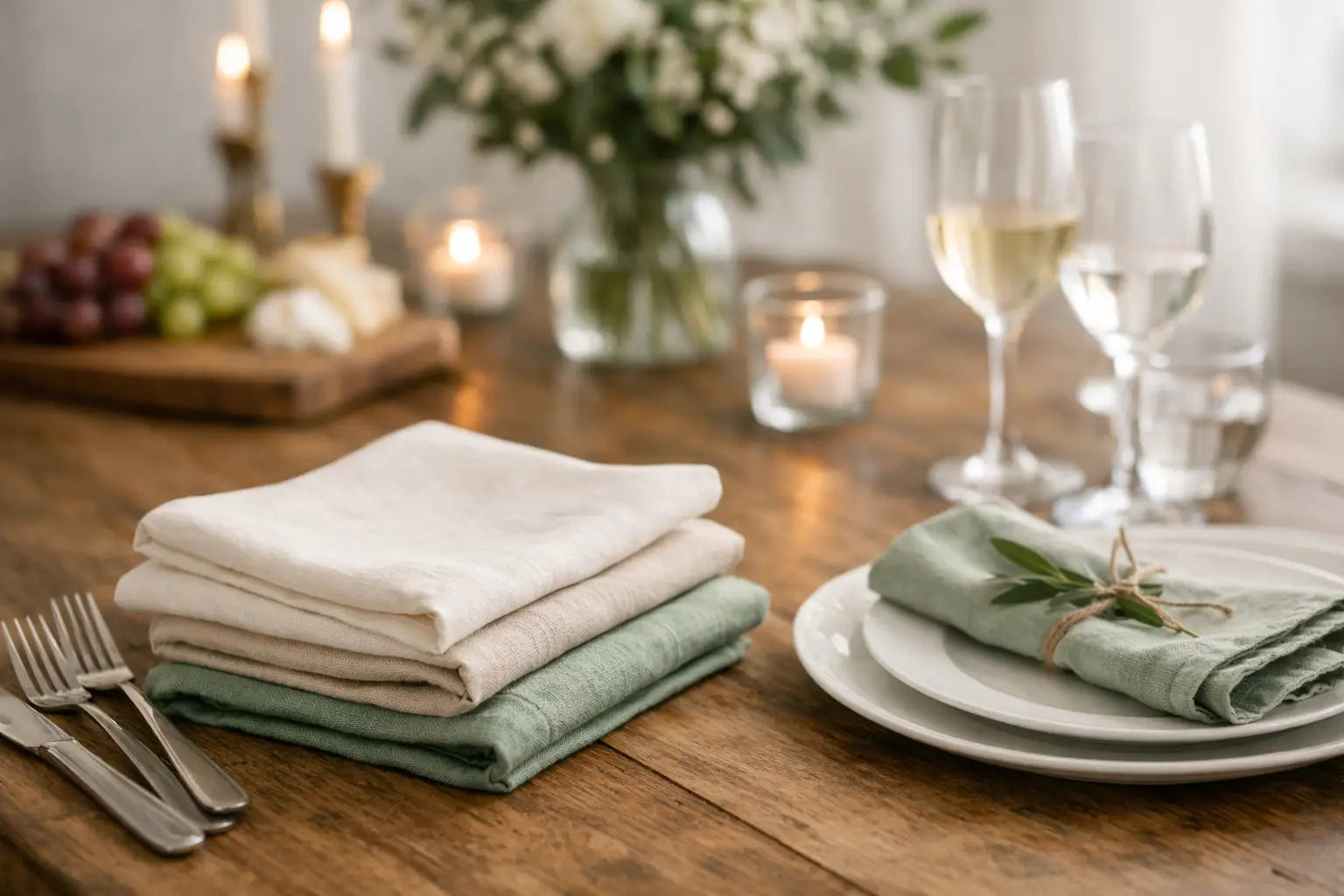
Soft neutrals are the easiest place to start. They pair beautifully with almost any crockery and let other elements, such as candles, greenery or seasonal touches, do the talking. White can look crisp and classic, but warmer shades often feel more forgiving and more in keeping with a relaxed, natural table.
Size matters more than many people expect. A generously sized napkin has a more luxurious drape and is easier to fold or tie. Smaller napkins can work for drinks or canapés, but for seated dining, a fuller shape tends to look more balanced.
You may also want to consider the finish. Some linen is very structured, while some is softer and more fluid from the first use. Neither is wrong. A crisper finish can feel a little more formal, whereas a softened linen napkin suits everyday entertaining and informal gatherings particularly well.
How to style linen napkins without overcomplicating the table
A beautiful table rarely needs too many gestures. Linen napkins are at their best when styled simply, allowing the fabric and colour to add interest on their own.
For an easy, understated look, fold the napkin into a loose rectangle and place it beneath the cutlery or centred on the plate. This approach feels neat but not rigid. If you want a softer effect, a casual knot works well, especially with washed linen in muted tones. It adds shape without feeling too dressed.
Napkin rings can be lovely, but they are not essential. In fact, if the rest of the table already has plenty of texture, perhaps woven placemats, ribbed glassware or a floral centrepiece, a plain folded napkin may feel more balanced. Entertaining often works best when every element is not competing for attention.
Colour coordination also deserves a gentle hand. Matching napkins exactly to everything else can feel a little forced. A more relaxed palette, built from tonal shades such as chalk, sand, taupe and olive, usually creates a richer result. If your tableware is plain, linen is a good way to bring in subtle warmth without adding pattern.
Linen napkins for entertaining through the seasons
One of the most useful things about linen is how easily it moves with the time of year. The same set of napkins can feel fresh in spring, grounded in autumn and quietly festive in winter, depending on what they are paired with.
In spring and summer, lighter shades feel airy and effortless. Think soft cream napkins with simple ceramics, clear glass and a few stems of faux florals or garden greenery. The look is clean and calm, which suits lunches, Easter tables and slower weekend gatherings.
As the months turn cooler, deeper neutrals and earthier layers start to come into their own. Stone, flax and muted brown tones work beautifully with wood, candlelight and seasonal foliage. At Christmas, linen still works hard because it keeps the table refined. Rather than relying on anything too glittered or theatrical, it helps festive styling feel warm, thoughtful and enduring.
That versatility makes linen an easy addition for anyone building a homeware collection that can be refreshed seasonally without being replaced entirely. It supports the table rather than dictating it.
Caring for linen so it always feels inviting
Linen is refreshingly low-fuss for something that looks so elegant. It is designed to be lived with, and that is part of its charm. Most napkins can be machine washed and used again and again, becoming softer over time.
The main thing is not to expect them to look overly pressed unless that is the effect you want. A perfectly flat napkin can suit a formal dinner, but for most entertaining at home, lightly creased linen feels more natural and more appealing. It suggests comfort rather than ceremony.
It is worth washing napkins in similar tones and avoiding anything too harsh that might strip away their softness. Folding them neatly once dry helps keep them ready for last-minute plans. If you entertain often, having a small stack on hand makes setting the table feel much easier.
Building a table that feels calm and complete
When people think about entertaining, they often start with the centrepiece. In reality, the atmosphere is usually built through smaller, quieter layers. Linen napkins, tactile crockery, gentle candlelight and natural textures all work together to make the table feel welcoming.
This is where a consistent approach matters. Rather than collecting pieces that only work once, it is often better to choose a few timeless elements that can be mixed across occasions. Linen napkins sit comfortably within that way of decorating. They are useful, beautiful and easy to style with what you already have.
For homes that favour soft neutrals and understated detail, they offer visual warmth without adding clutter. They can make a midweek supper feel special, but they are equally at home on a carefully laid table for guests. That kind of flexibility is what turns a simple homeware choice into a lasting one.
At Sable Homeware, that is often the appeal of the best table pieces. They do not shout for attention. They simply help the room feel softer, calmer and more put-together.
If you are refining the way you host, linen napkins are a small place to start, but a meaningful one. They bring a sense of ease to the table that guests notice straight away, even if they cannot quite name why.