How to Style Neutral Home Accessories
A room rarely feels calm by accident. More often, it comes down to the smaller pieces - the ceramic bowl on a console, the soft glow of a candle, the woven basket that makes storage feel deliberate rather than purely practical. Neutral home accessories have a quiet way of shaping a space, bringing warmth and cohesion without asking for attention.
For homes that are meant to feel lived in, welcoming and effortlessly pulled together, neutrals offer something stronger than a passing trend. They create a gentle foundation that works across seasons, sits comfortably with natural materials, and leaves room for texture, form and atmosphere to do the talking. The result is not flat or forgettable. Done well, it feels layered, timeless and deeply inviting.
Why neutral home accessories work so well
There is a reason soft, understated pieces remain favourites year after year. They are easy to live with. A palette of chalk, oat, stone, sand and warm grey tends to settle naturally into a home, whether your style leans country, contemporary, rustic or classic.
That versatility matters. Decorative accessories are often the finishing touch, but they also do a great deal of visual work. They soften harder surfaces, connect one area of a room to another, and help larger furniture feel intentional. When those accessories stay within a neutral palette, the eye moves more easily around the space. Nothing competes too harshly, which gives the room a sense of quiet balance.
There is also a practical advantage. Neutral pieces are easier to move from room to room and simpler to refresh with the seasons. A textured vase that works in spring with faux blossom can feel just as right in autumn with dried stems, or at Christmas with a few clipped winter branches. That kind of flexibility makes each piece feel more worthwhile.
The difference between neutral and bland
The hesitation some people have with neutrals is understandable. If every item is the same tone, in the same finish, a room can begin to feel one-note. The answer is not to introduce louder colours for the sake of contrast. It is to build depth through variation.
Texture is usually what makes neutral styling feel rich. Think ribbed ceramics, woven seagrass, soft linen, matte candle holders, glass with gentle irregularity, and wood with visible grain. Even when the colour palette stays restrained, these shifts in surface and finish stop a display from feeling flat.
Shape matters too. A grouping of accessories becomes more interesting when silhouettes vary - perhaps a rounded vase beside a taller candlestick, or a low tray paired with a small sculptural object. When colour takes a quieter role, form becomes more noticeable.
A warm undertone is often the detail that keeps a neutral scheme feeling welcoming. Very cool greys can look clean, but they can also feel severe if they dominate. Warmer neutrals such as taupe, cream, beige and soft brown generally bring more softness, especially in British homes where natural light can change quickly through the day.
How to choose neutral home accessories for each room
The easiest approach is to think about the mood of the room first, then choose pieces that support it. This avoids buying accessories simply because they are attractive in isolation.
In the living room
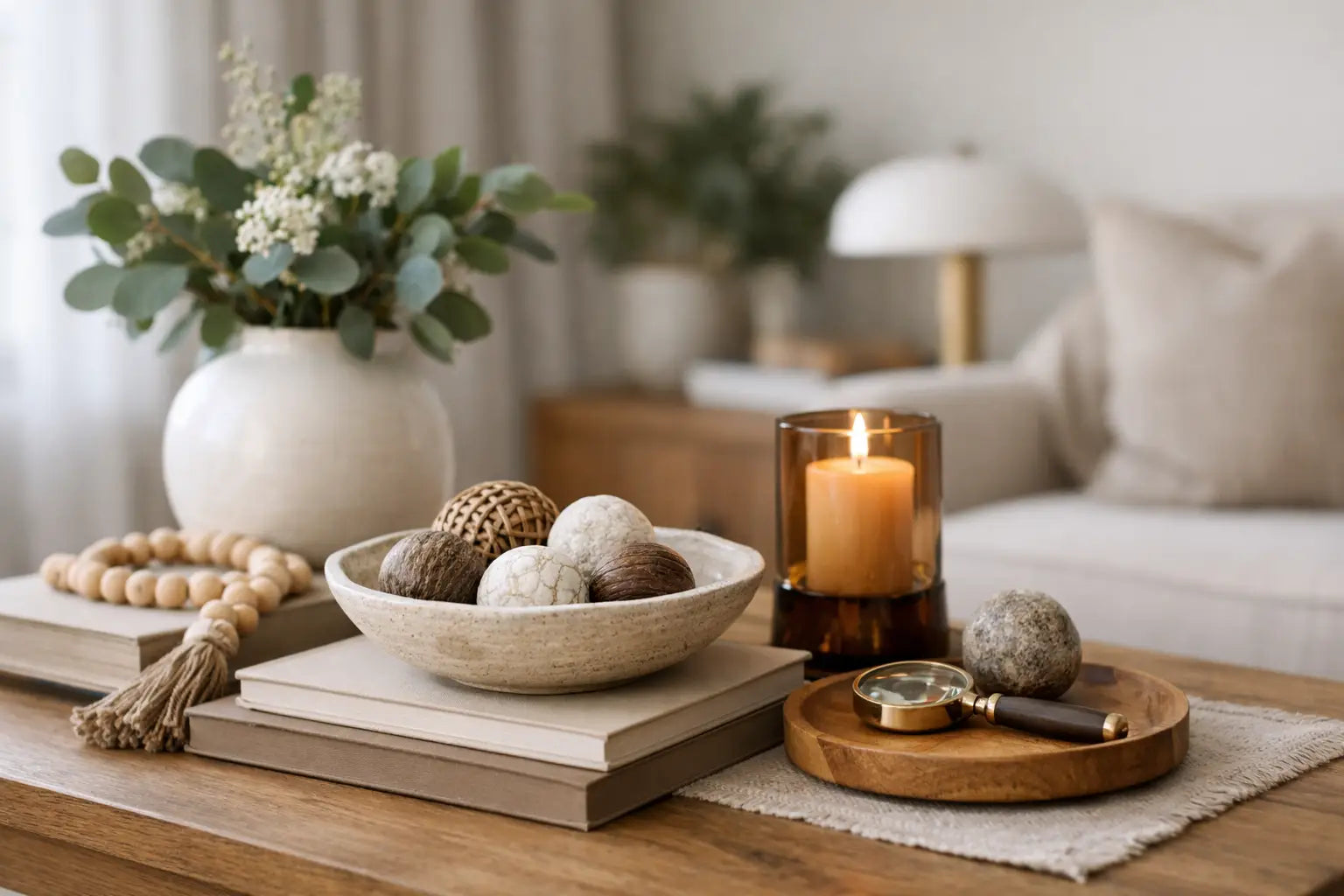
The living room benefits from accessories that create ease and softness. Candles, trays, decorative bowls, faux florals and textured storage all work well here because they add detail without creating clutter. A coffee table or sideboard often needs a little variation in height and material, so combining ceramic, glass and woven finishes usually feels more balanced than matching everything too closely.
This is also a space where restraint helps. One larger arrangement on a console can often look more refined than several small objects scattered around the room. If the room already has pattern through cushions, rugs or upholstery, quieter accessories tend to let those features breathe.
In the kitchen
Neutral styling in the kitchen works best when beauty and usefulness overlap. Storage jars, utensil pots, wooden boards and simple tableware can all contribute to the overall look while still being genuinely useful. The kitchen should not feel over-dressed, so a few thoughtful pieces are usually enough.
Natural materials come into their own here. Wood, ceramic and rattan bring softness to harder finishes such as stone worktops, tiles and metal fixtures. Even a small arrangement by the sink or on open shelving can make the room feel more finished.
On the dining table
A neutral table setting has a lovely sense of ease, whether it is for everyday meals or a slower weekend lunch. Layered placemats, stoneware, simple candlelight and a low centrepiece create interest without feeling fussy. This is where tonal styling works especially well - similar shades in different textures feel elegant and understated.
The trade-off is that very pale tablescapes can sometimes feel a little washed out in low light. Bringing in one grounding element, such as darker wood, smoked glass or a linen runner in a deeper neutral, can give the arrangement more definition.
In the hallway or entryway
Hallways are often overlooked, yet they set the tone for the rest of the home. A mirror, a softly scented candle, a decorative dish and a small wreath or vase of faux stems can make even a narrow entrance feel warm and finished.
Because these spaces are usually compact, scale matters. A few well-proportioned accessories will feel calm and intentional. Too many can quickly feel crowded.
Layering neutrals with confidence
The most successful neutral spaces tend to use more shades than you first notice. Cream against white, taupe beside stone, soft brown against warm grey - these small shifts are what create depth.
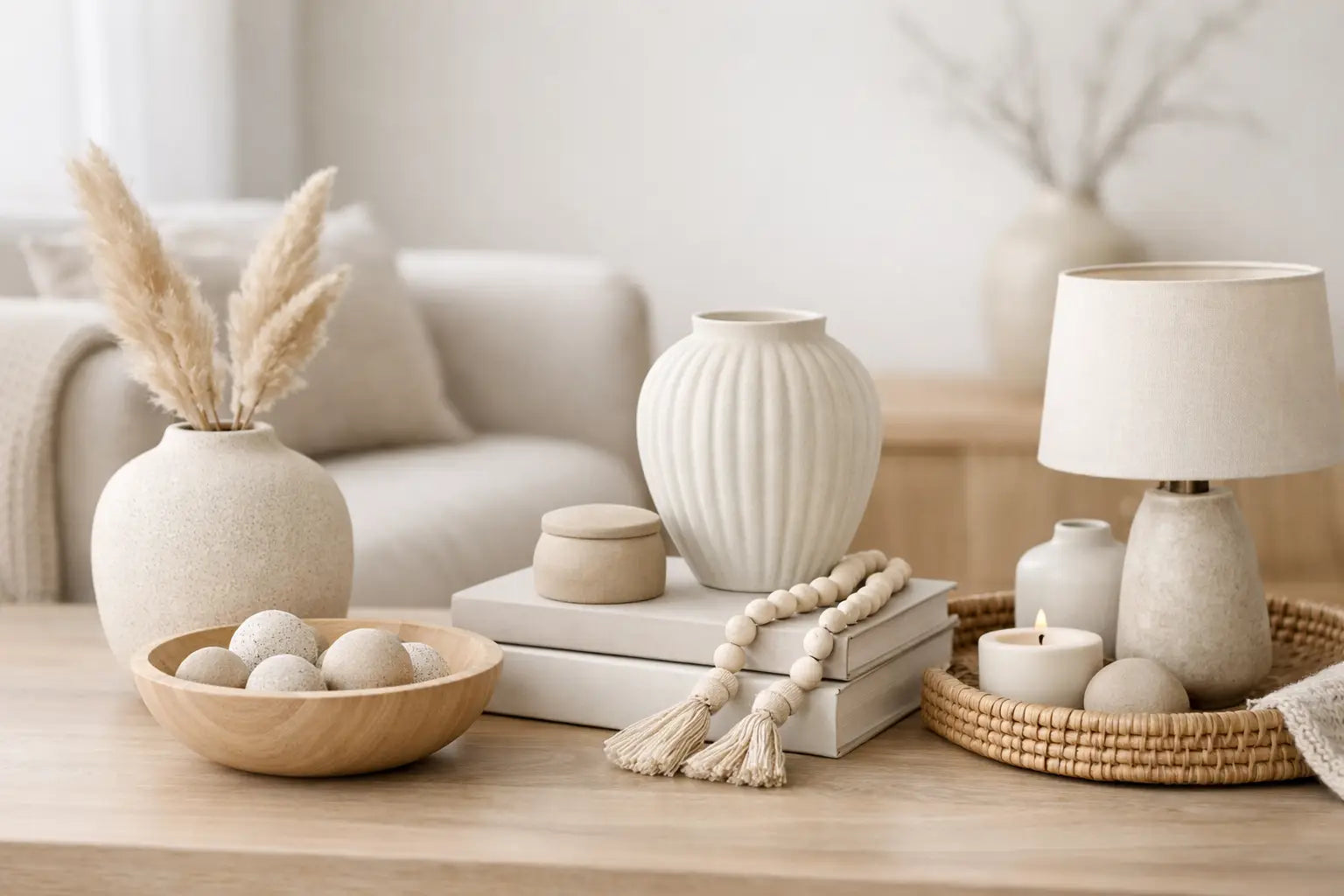
A simple rule is to work with three tones in one arrangement. Start with a light base, add a mid-tone, then include a darker neutral to anchor the look. This can be as subtle as ivory ceramics, a sand-coloured linen texture and a deeper wooden accent. The effect is gentle, but it gives the eye something to settle on.
It also helps to repeat materials across a room. If a woven basket appears on the hearth, a similar natural texture on a tray or planter elsewhere in the room creates continuity. Repetition is one of the easiest ways to make styling feel intentional rather than random.
Styling shelves, consoles and corners
When people say a room feels unfinished, it is often because the in-between spaces have been left untouched. Shelves, sideboards and quiet corners benefit enormously from neutral accessories because they help bridge the gap between bare and overfilled.
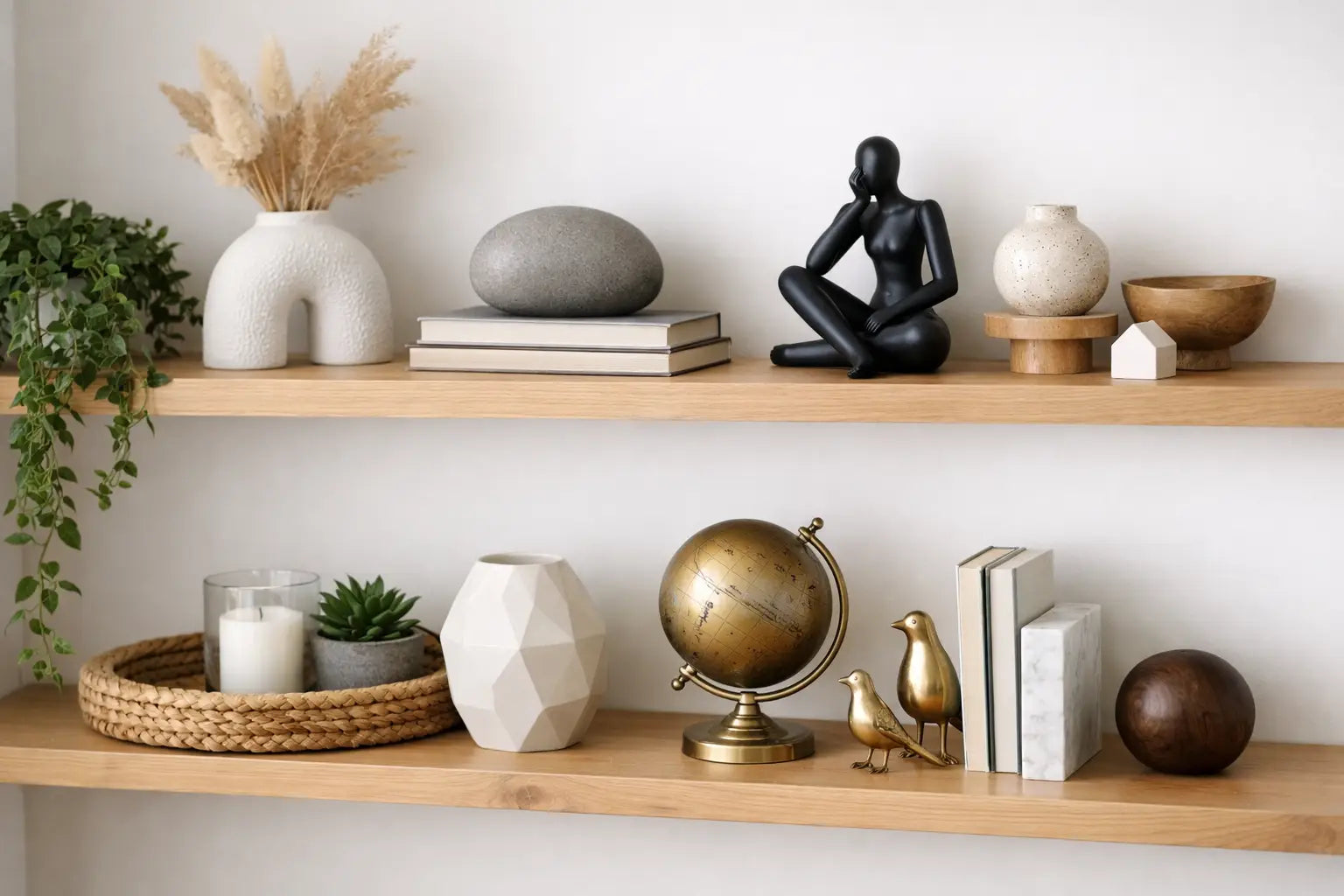
On shelves, try to avoid lining up items of equal size and shape. Books, small vases, candle holders and storage pieces look more natural when grouped with a little asymmetry. Leaving some breathing space is just as important as the objects themselves.
A console table usually wants one stronger focal point and a few supporting details. That might be a vase of faux florals, a lamp, or a wreath above the table, balanced with a tray or bowl below. The overall look should feel relaxed, not too studied.
Corners are different. They often respond best to something with height and softness, such as a tall arrangement of branches or a generously sized basket. A corner does not need many elements to feel resolved. It just needs one that feels intentional.
Neutral home accessories through the seasons
One of the loveliest things about a neutral palette is how easily it adapts. Spring can lean into lighter textures, fresh faux florals and soft greens. Summer might bring in more woven details and airy linen touches. Autumn suits richer woods, warmer candlelight and fuller arrangements. At Christmas, muted wreaths, natural foliage and understated decorative accents can still feel festive without disrupting the overall calm of the home.
This is where a little editing makes a difference. Rather than replacing everything each season, it is often enough to swap a few accents while keeping the core pieces in place. A timeless ceramic vase or a favourite set of candle holders can work all year, simply styled in a different way.
For many homes, that is the real appeal of a neutral approach. It removes some of the visual noise and decision-making. Pieces do not need to shout to have impact. They just need to sit beautifully together.
A calm home is rarely about having less for the sake of it. It is about choosing better, layering gently, and letting texture, shape and warmth create the atmosphere. Neutral home accessories do this quietly, which is precisely why they last. If a space feels a little unsettled, the answer is often not more colour or more decoration, but a few thoughtful pieces that bring everything back into balance.