How to Style Neutral Home Decor Well
A neutral room can fall flat for one simple reason - too much of the same thing. When every surface is beige, every fabric is similar, and every accessory blends into the next, the space loses its warmth instead of gaining calm. Knowing how to style neutral home decor is less about choosing one perfect shade and more about creating contrast in quieter, more thoughtful ways.
The most inviting neutral interiors never feel stark or unfinished. They feel layered, soft, and lived in, with pieces that sit comfortably together. That is what makes this look so enduring. It is not trend-led, and it does not rely on bold statements to feel finished. It simply asks for a little more attention to texture, proportion and placement.
Start with a warmer neutral base
If you want a home to feel calm rather than cold, begin with neutrals that have warmth in them. Soft stone, oat, ivory, taupe and sand usually create a gentler foundation than anything too bright or too grey. This does not mean grey has no place, but cooler tones often need balancing with natural materials and softer textiles to stop a room feeling austere.
Walls, larger furniture and rugs tend to set the mood first. If those core elements lean warm, styling becomes easier because decorative pieces can sit naturally within the scheme. If you already have cooler flooring or painted walls, do not feel you need to start again. Introduce warmth through woven storage, wooden accents, linen-look textiles, ceramics and candlelight. Neutral decorating works best when the room feels welcoming before the accessories even go in.
How to style neutral home decor with texture
Texture is what gives a neutral room depth. Without it, the eye has nowhere to rest. With it, even the simplest colour palette feels complete.
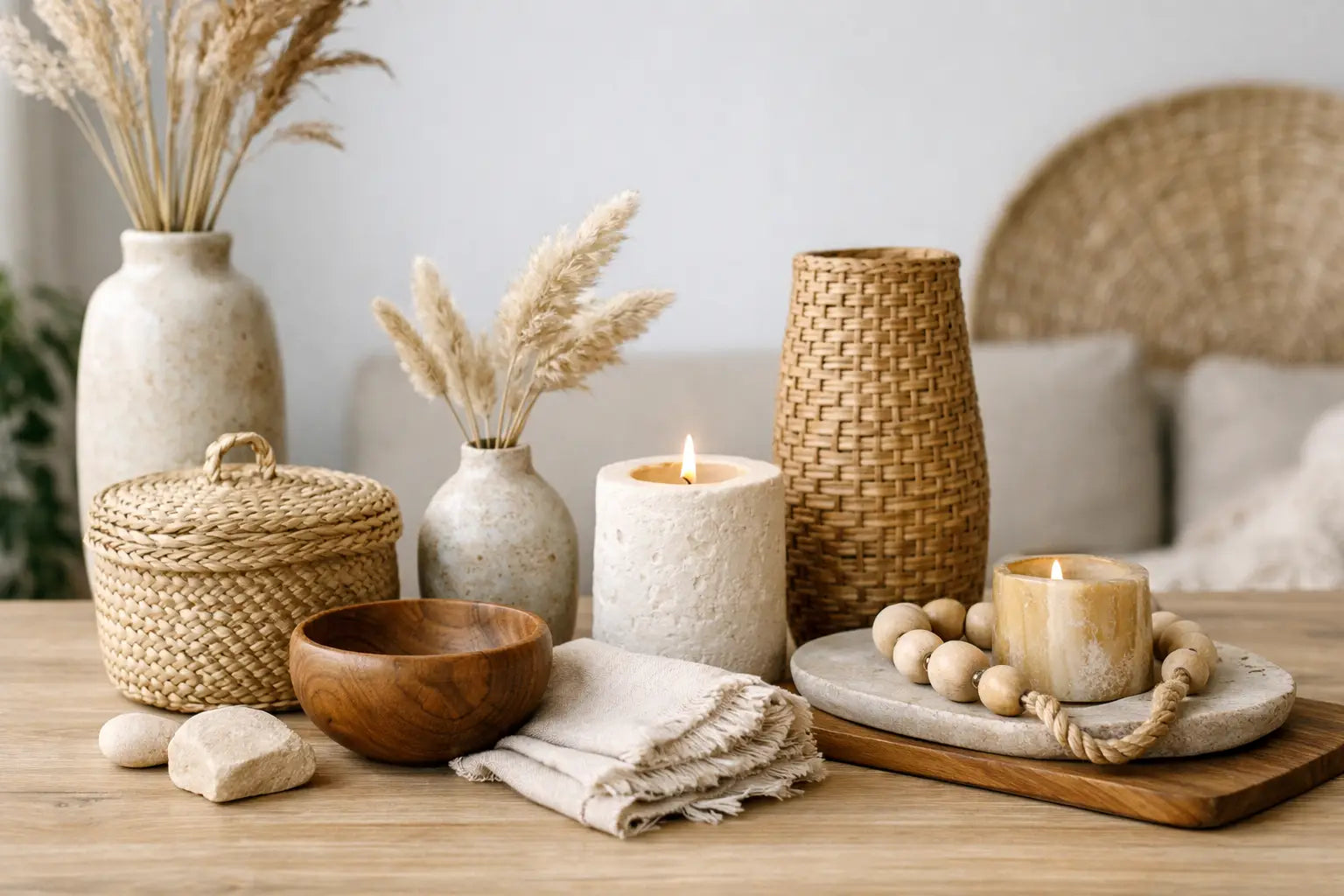
Think about contrast across surfaces. A smooth ceramic vase beside a ribbed candle holder, a woven basket under a painted console table, or a soft throw draped over a structured chair all create variation without disrupting the palette. In a neutral scheme, these subtle shifts matter more than bright colour ever would.
Natural materials are especially effective because they add warmth without looking forced. Wood, rattan, stone, linen, glass and faux florals all bring a different finish to a space. If everything in the room is matte and soft, include one or two pieces with a slight glaze or reflective quality. If a room already has hard finishes, bring in something tactile and relaxed.
This is also where seasonal styling becomes easy. In spring, lighter woven textures and fresh faux stems keep the room airy. In autumn, heavier candle holders, deeper taupes and more textural layers add a gentle sense of richness without changing the whole scheme.
Use tonal variation, not one-note colour
Neutral does not mean one shade repeated across the room. In fact, that is often why a scheme feels unfinished. The most elegant neutral spaces use a family of tones rather than a single colour.
Try combining creamy whites with sand, mushroom, beige and soft brown. Add touches of black or charcoal only where you want definition, such as a lamp base, frame or small decorative object. These darker notes act like punctuation. Too many, and the room feels sharper. Too few, and everything can blur together.
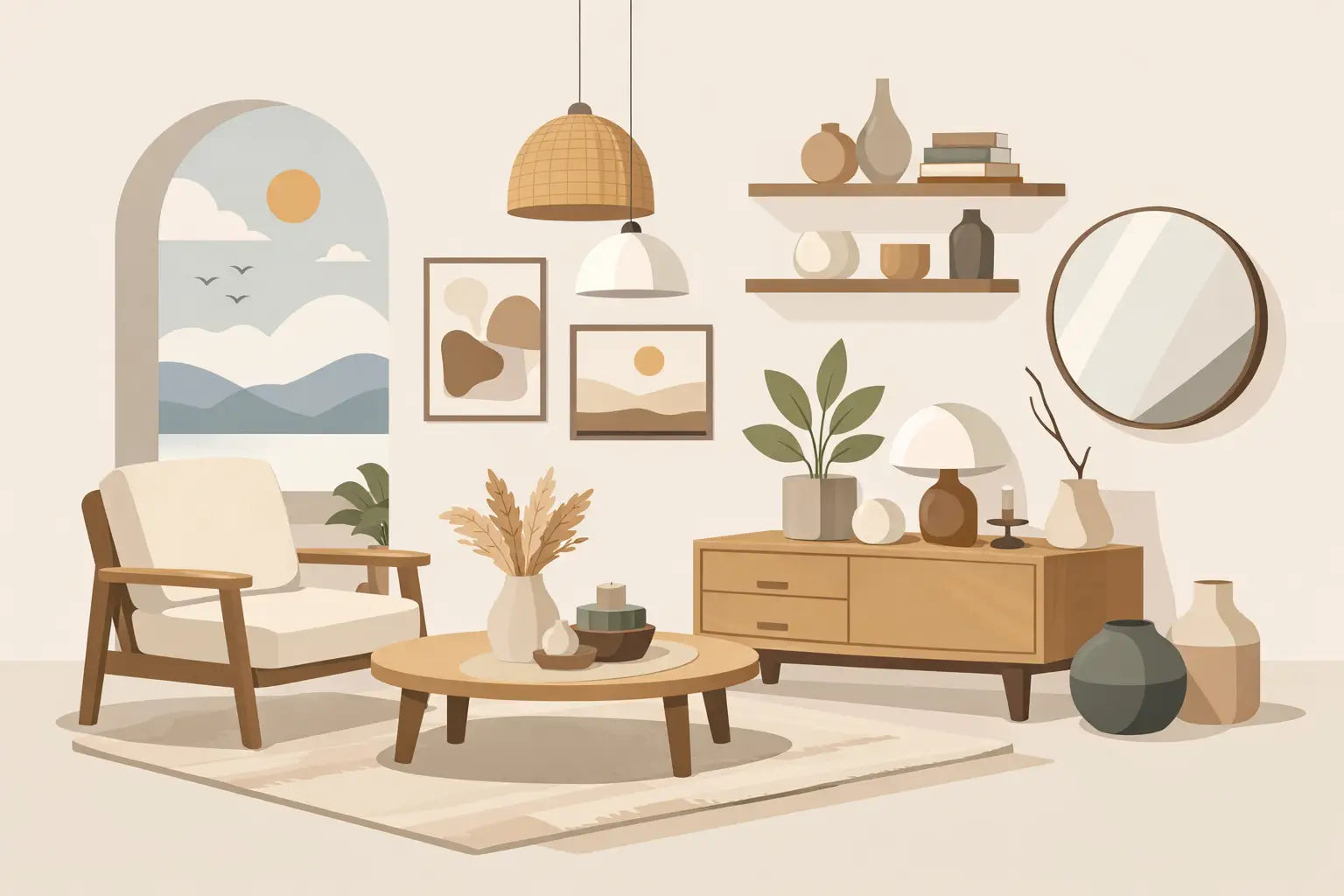
It helps to think in layers. Your base might be an ivory sofa, a natural rug and pale walls. The next layer could be oat cushions, a wooden bowl and a stone-effect vase. The final layer might include a darker woven tray, soft greenery or a pair of candle holders to give shape. Each tone supports the others, and the room feels more complete because of it.
Let shape do some of the work
When colour is restrained, shape becomes more noticeable. This is often what separates a room that feels styled from one that feels simply decorated.
A collection of accessories in similar tones can still feel dynamic if their forms vary. Pair rounded pieces with straighter lines. Mix taller objects with lower, wider ones. A soft arrangement of faux florals can balance a structured lamp. A curved vase can soften a shelf filled with rectangular frames or boxes.
There is a trade-off here. If every item has an unusual silhouette, the room begins to feel busy despite the neutral palette. Usually, one or two statement shapes in each area are enough. The rest can be simpler and quieter, helping the eye move naturally around the display.
Style in small groupings
One of the easiest ways to approach how to style neutral home decor is to stop thinking room by room and start thinking surface by surface. Consoles, coffee tables, shelves, bedside tables and dining tables all benefit from simple groupings rather than scattered pieces.
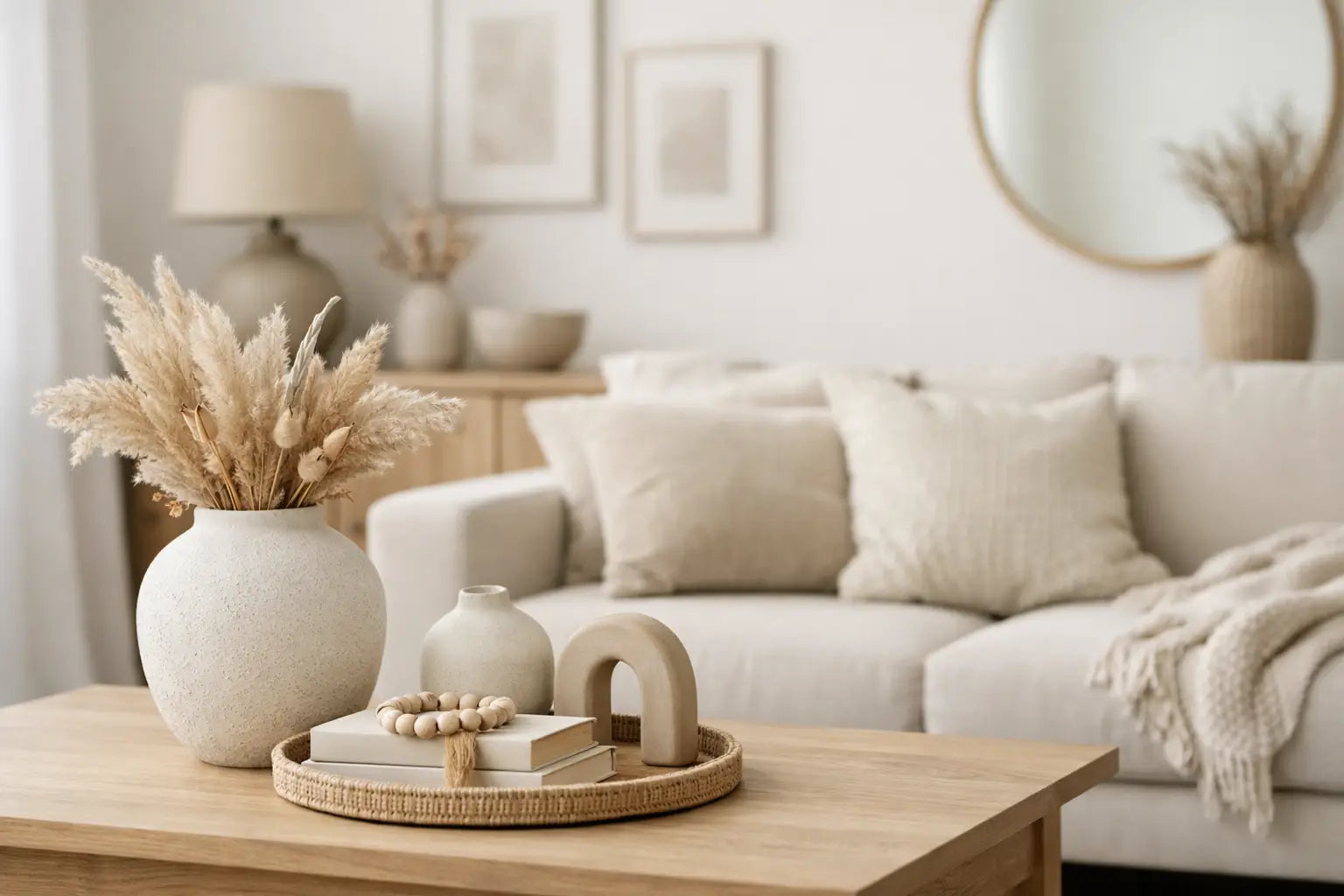
A good arrangement often includes three elements: something with height, something with texture and something practical or grounding. On a hallway console, that might be a vase of faux stems, a woven tray and a candle. On a coffee table, it could be a bowl, a stacked decorative object and a softly scented candle. The combination feels useful as well as beautiful.
Spacing matters as much as the pieces themselves. Leave enough room around a grouping for it to breathe. Neutral spaces rely on this sense of ease. If every surface is full, the room loses the calm that makes the palette so appealing.
Keep everyday areas soft and functional
Neutral styling is particularly effective in the spaces used most often, because it creates a backdrop that feels settled and easy to live with. Kitchens, dining areas and entryways can all feel more refined with small, useful updates.
In a kitchen, think about what can stay out on display without creating visual noise. A ceramic utensil pot, a wooden board, a softly coloured tea towel or a neatly arranged tray can add warmth while still being useful. In a dining area, a simple centrepiece with candles and a low arrangement is often enough. You do not need a formal tablescape every day for the space to feel finished.
Entryways set the tone for the whole home. A wreath, a bowl for keys, a lamp or candle, and one or two layered decorative pieces can turn even a narrow hallway into something more welcoming. This is where a coordinated collection tends to make the biggest difference - not because you need more things, but because a few well-chosen ones can pull the space together quickly.
Add life, but keep it restrained
A neutral scheme always benefits from something organic. Faux florals, branches, greenery and wreaths soften the edges of a room and stop it feeling too static. They also introduce shape and movement, which can be difficult to create with accessories alone.
The key is choosing stems and arrangements that look natural within the rest of the room. Soft whites, muted greens and earthy tones sit beautifully in a neutral home. Oversized, overly colourful displays can feel disconnected unless the room is otherwise very pared back.
A single arrangement can often do more than several smaller ones. It gives the eye a focal point and brings a sense of quiet abundance. That is especially useful on dining tables, kitchen islands and shelves that need height without clutter.
Know when to stop
Perhaps the hardest part of styling neutrals is editing them. Because the palette is soft, it is easy to keep adding pieces in the hope of making the room feel finished. But the beauty of neutral decor lies in restraint.
If a shelf already has texture, height and tonal contrast, it probably does not need another object. If a sofa has cushions, a throw and a nearby side table with a candle, more accessories may only distract from what is already working. Calm rooms are rarely accidental. They are usually the result of choosing enough, then stopping.
This is also why buying in a more deliberate way helps. Pieces that share a similar tone, finish or mood naturally sit together more easily, which removes some of the guesswork. For anyone drawn to timeless interiors, that consistency is often what makes styling feel effortless.
Learning how to style neutral home decor is really about trusting subtle details to carry the room. A little texture, a little contrast, and a few thoughtful layers will always feel more beautiful than filling every corner. When a space feels warm, balanced and easy to live in, it does not need to ask for attention - it simply feels right.