How to Layer Coffee Table Decor Well
A coffee table can look oddly unfinished even in a beautifully styled room. The sofa is in place, the rug softens the floor, the cushions feel right - yet the table sits flat and uncertain. Knowing how to layer coffee table decor is often what turns that in-between surface into something that feels calm, complete and lived in.
The key is not filling every inch. A well-styled coffee table has breathing space, variation and a little warmth. It should feel intentional, but never overworked. The most inviting arrangements look as though they settled there naturally, even when every piece has been chosen with care.
How to layer coffee table decor with balance
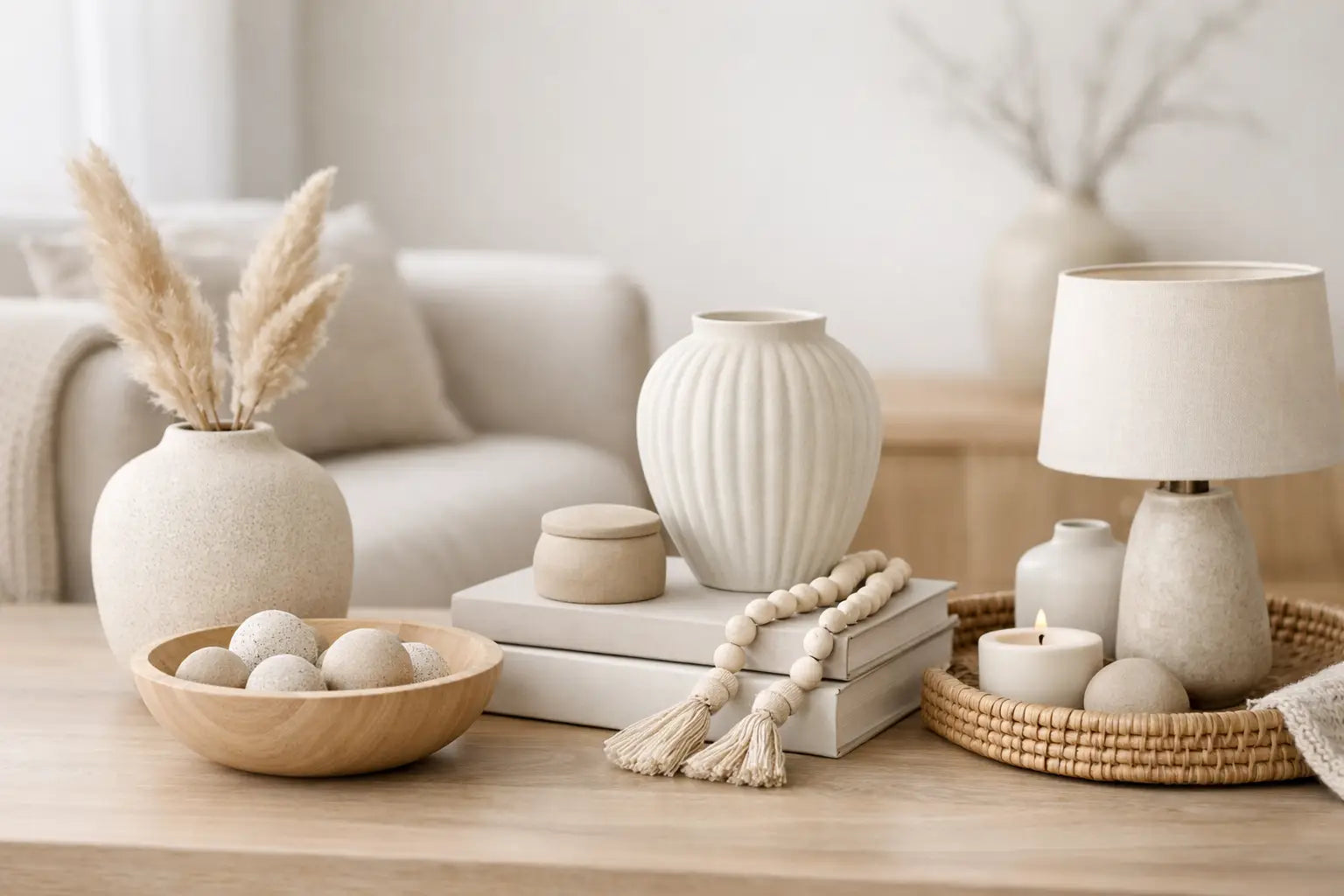
Layering is really about creating gentle contrast. You want different heights, shapes, textures and functions to sit together in a way that feels cohesive. On a coffee table, that usually means combining a practical base, something organic, something sculptural and a personal finishing touch.
A tray often gives the arrangement its structure. It visually gathers smaller pieces and stops the table from feeling scattered. If your coffee table is large, a tray helps anchor the display. If the table is smaller, it can still work beautifully, though the tray should leave enough visible surface around it so the whole piece does not feel cramped.
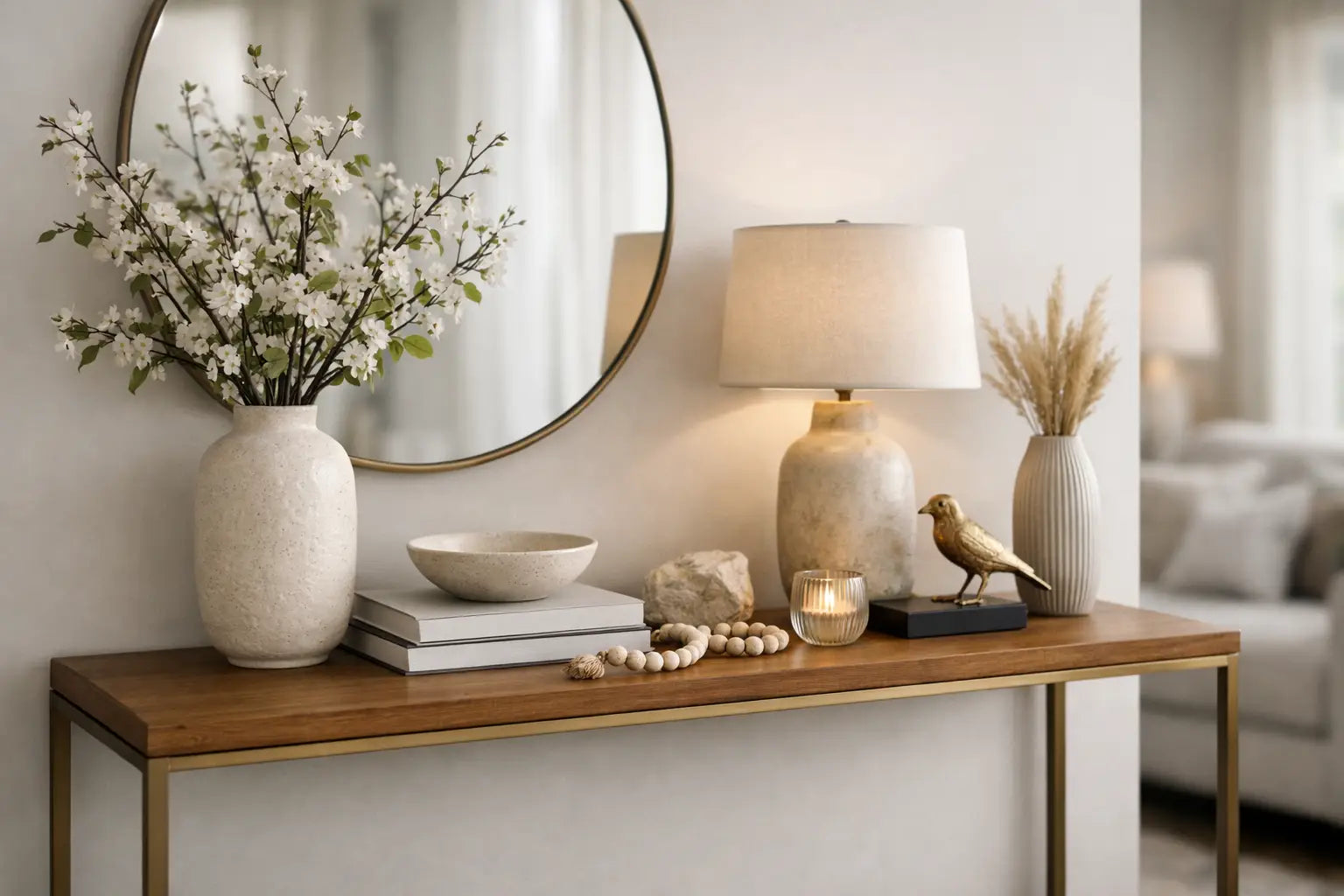
Once you have a base, build in varied heights. A stack of books or a lidded decorative box can create a low platform. A candle holder, vase or bowl introduces another layer above that. This staggered effect is what gives the arrangement depth. Without it, even lovely objects can look flat when placed side by side.
Texture matters just as much as height. A smooth ceramic vase, a woven tray, a stone-effect bowl and a linen-bound book all bring subtle contrast. In a neutral scheme, texture keeps the look from feeling one-note. It adds richness without asking for strong colour or busy pattern.
Start with the shape of your table
The way you layer coffee table decor should always respond to the table itself. A round coffee table usually looks best with a softer, more central arrangement. You might place a tray in the middle, then build out from there with one or two complementary pieces. Too many angular items on a round table can feel slightly at odds.
A rectangular table gives you more room to divide the surface into sections. This works especially well if the table is generous in size or if it has a lower shelf. You can style one side with books and a candle, and the other with a vase or bowl, allowing a clear gap between the two groupings. That empty space is part of the composition.
Square coffee tables often suit a grid-like approach, with four zones that feel balanced without being perfectly matched. This is where pairs can work well, though they still need variation. Two stacks of books at the same height can look stiff. A stack of books on one side and a vase on the other will feel softer.
If your table is upholstered or heavily textured already, you may need fewer decorative pieces. If it is glass, consider adding warmer materials such as wood, rattan, ceramic or faux florals so the arrangement does not feel cold.
Build your layers from the bottom up
The easiest way to style a coffee table is to think in layers rather than individual objects. Begin with the broadest visual element and work upward.
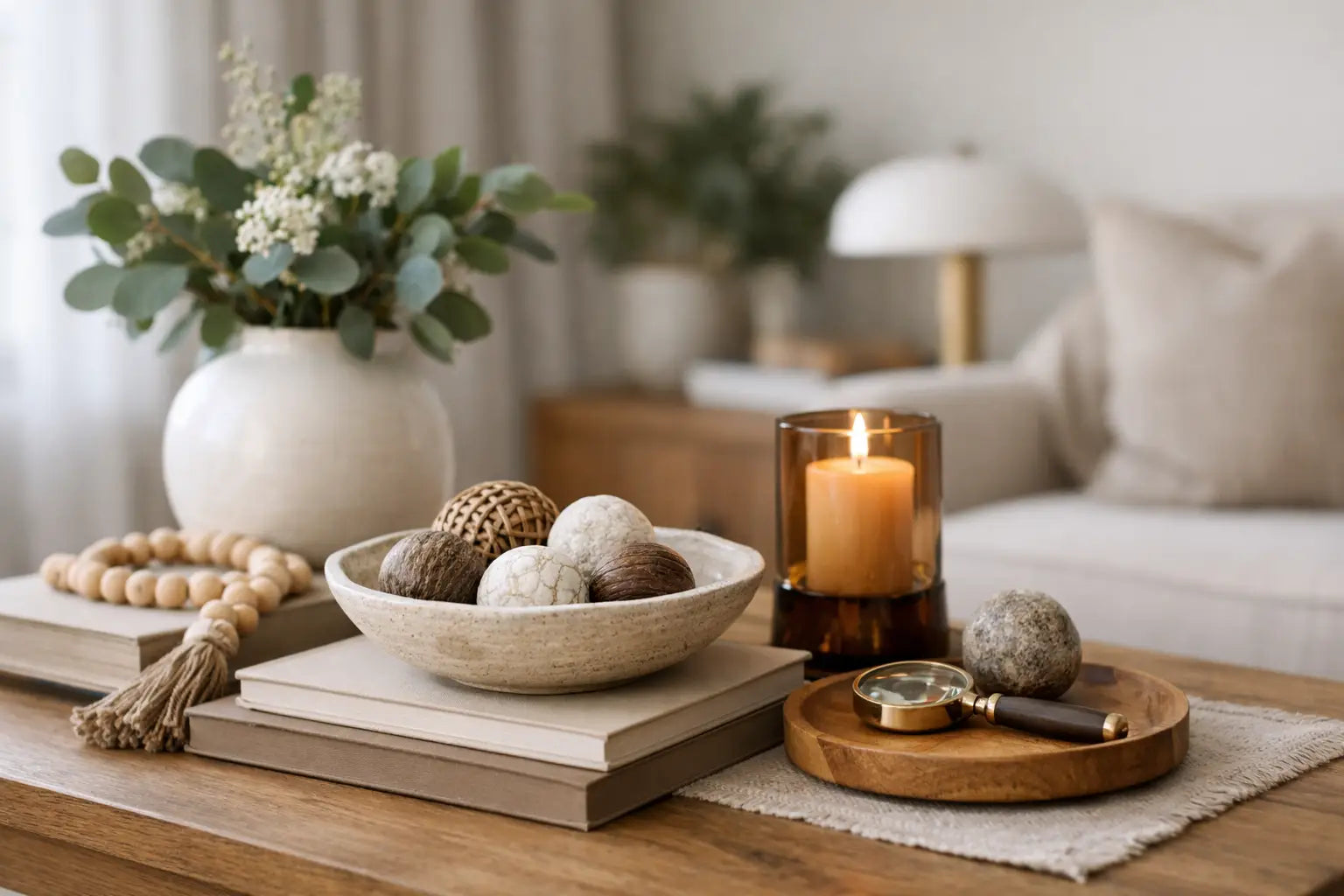
The first layer is the base. This could be a tray, a stack of books, or both. Books are especially useful because they lift smaller pieces and introduce colour in a quiet way. Choose covers that sit comfortably within the room - soft taupes, creams, muted greens, charcoal or warm neutrals usually blend more naturally than anything overly bright.
The second layer is your main decorative form. This might be a vase, a bowl, a lantern or a candle holder. It should be substantial enough to hold attention, but not so tall that it interrupts sightlines across the room. On a coffee table, lower and wider often feels more relaxed than tall and narrow.
The third layer is what gives the arrangement life. Faux florals, a beaded garland, a small sculptural object or a set of coasters can soften the harder lines and make the display feel finished. These details should never compete with the main piece. Their role is to support, not shout.
A final layer is often practical rather than decorative. A candle you actually light, a bowl for matches, or a book you genuinely enjoy leafing through makes the table feel part of daily life. That blend of beauty and usefulness is usually what makes a room feel convincing.
Choose a simple styling formula
If you are not sure where to start, a three-part composition is usually the easiest to get right. Try books, a candle and a vase. Or a tray, a bowl and a small floral stem. This gives enough variety to feel layered, but not so much that the table becomes cluttered.
Odd numbers often look more natural, but this is not a rule to force. It depends on the size of the table and the scale of the pieces. A large rectangular coffee table may need two distinct groupings rather than one cluster of three. A compact round table may only need two elements if one of them has enough presence.
The more polished approach is to think about visual weight rather than counting objects. A chunky ceramic vase has more weight than a delicate candlestick. A large woven tray can balance several smaller pieces. If everything is visually light, the arrangement may disappear. If everything is heavy, it can look crowded.
Keep the palette calm and cohesive
When a coffee table feels busy, the issue is often not the number of objects but the lack of cohesion. Too many finishes, colours or styles competing in a small space can make even a tidy arrangement feel unsettled.
A restrained palette creates calm. Natural tones such as stone, sand, ivory, soft brown and muted green work particularly well because they reflect light gently and sit comfortably with most interiors. Black can add definition in small doses, especially through a candle holder or decorative accent, but too much contrast can feel sharper than the room needs.
This is where a little discipline pays off. Pieces do not need to match exactly, but they should feel as though they belong in the same home. At Sable Homeware, that idea of quiet coordination is what makes styling easier - each element contributes to the whole rather than pulling focus for itself.
Add season without losing the room
Seasonal styling can work beautifully on a coffee table, but it needs a light hand. A few thoughtful changes usually feel more elegant than a full reset.
In spring, a soft faux floral arrangement or a mossy green accent can freshen the surface without disrupting a neutral room. In autumn, you might introduce warmer candlelight, deeper ceramics or subtle natural textures. At Christmas, a small wreath, bells in a bowl or a gently festive stem can nod to the season while still feeling refined.
The best seasonal updates sit within your existing palette. If your room is built around warm neutrals and natural materials, bright novelty pieces will feel disconnected. A coffee table should still belong to the room, even when it reflects the time of year.
What to avoid when styling a coffee table
The most common mistake is overfilling the surface. A coffee table is still a functional piece of furniture. It may need to hold a mug, a book, a remote or a small plate when you are relaxing or hosting. If every inch is decorated, the arrangement may look lovely for a photograph but awkward in real life.
Another issue is using pieces that are all the same height. When everything sits at one level, the eye has nowhere to settle. Even a simple arrangement benefits from a little rise and fall.
It is also worth watching scale. Tiny accessories on a large coffee table can look lost, while oversized vessels on a petite table can feel top-heavy. If something seems off, it usually is. Step back and look at the room as a whole rather than adjusting from a few inches away.
Lastly, do not style the table in isolation. The coffee table sits at the centre of a wider scheme, so it should echo the textures and tones around it. If your shelving is minimal and your sofa area is soft and restrained, a highly decorative table may feel out of place.
A coffee table should feel finished, not formal
The most beautiful coffee tables rarely look rigid. They feel edited, warm and quietly personal. A candle that softens the evening, a bowl with texture, a stack of books you return to, a vase that brings in shape and softness - these are the layers that make a living space feel complete.
If you are learning how to layer coffee table decor, start smaller than you think you need. Place a few pieces, leave space around them and adjust slowly. The right arrangement is not about adding more. It is about choosing well, and leaving out anything that does not add something.
A calm room is often built from these small decisions, and a coffee table is one of the easiest places to begin.