Natural Texture Home Accessories That Last
There is a reason some rooms feel instantly settled while others still seem unfinished, even when everything is technically in place. Very often, the difference comes down to texture. Natural texture home accessories bring that quiet depth which makes a space feel warmer, softer and more settled without asking for a full redesign.
If your home already leans towards gentle neutrals, layered styling and pieces that feel easy to live with, texture is usually what ties everything together. It softens clean lines, adds interest without visual noise and gives everyday spaces a more grounded, timeless character. The effect is subtle, but it changes how a room feels the moment you walk in.
Why natural texture home accessories work so well
The appeal of natural texture home accessories is not simply that they look lovely on a shelf or table. They create contrast in a way that still feels calm. A glazed ceramic vase beside a woven basket, a linen-look ribbon around faux stems, or a rattan tray on a painted console all add variation without disrupting the palette.
That balance matters. If everything in a room is smooth, matching and flat in finish, even a beautiful scheme can feel a little one-note. Texture introduces warmth and movement. It gives the eye somewhere to rest, but also something to notice.
Natural finishes also tend to outlast short-lived trends. Wicker, wood, stone-effect surfaces, soft fabrics, matte ceramics and dried-look botanicals have a familiarity that feels enduring. They suit country homes, modern townhouses and period properties alike because they are less about fashion and more about atmosphere.
The textures that make a home feel layered
Not all texture works in the same way. Some pieces add softness, while others create structure. The most inviting rooms usually use a mix of both.
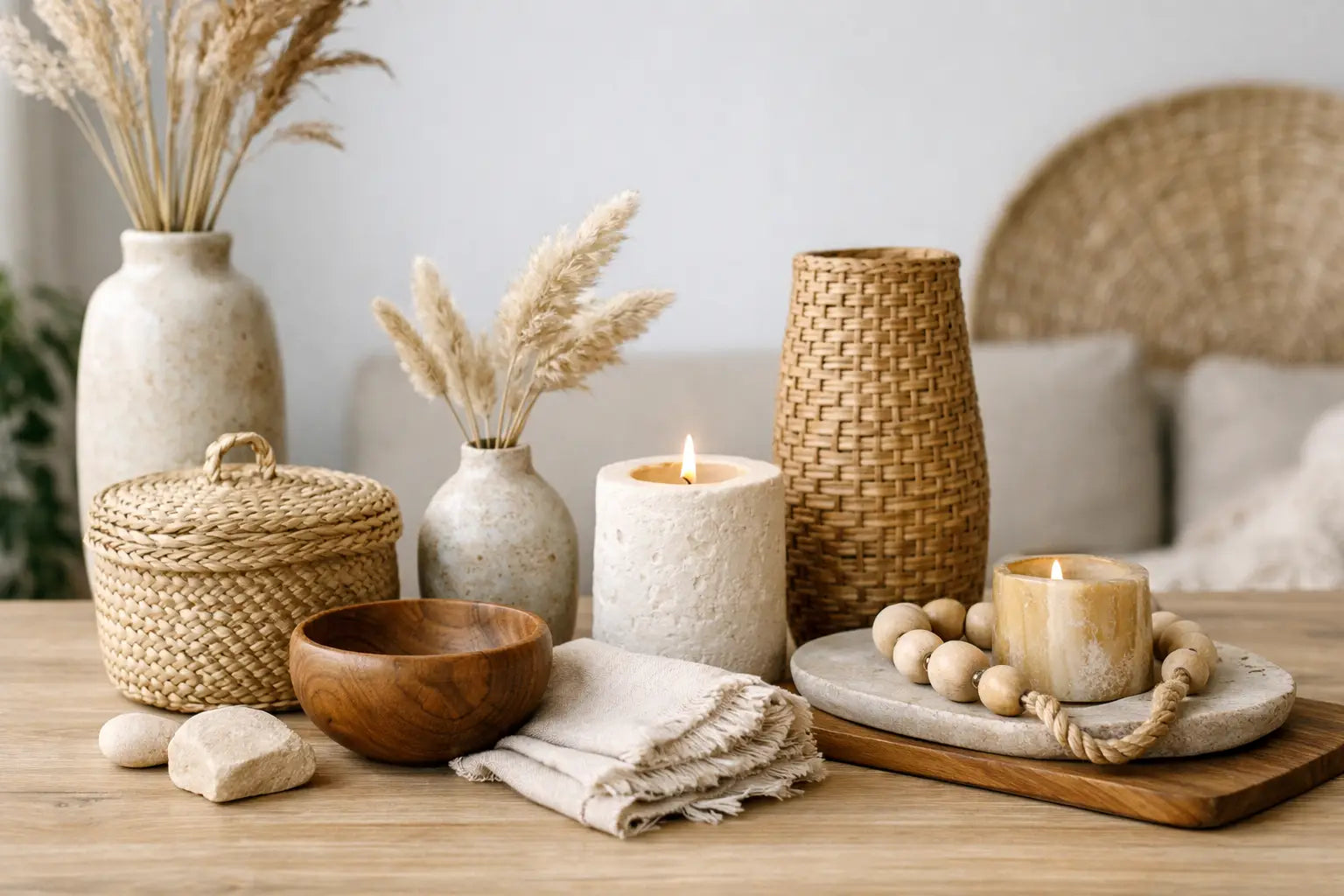
Woven materials such as rattan, seagrass and wicker bring an easy, informal warmth. They are especially useful in spaces that need a little softness, such as kitchens with painted cabinetry or hallways with harder flooring. Baskets, trays and lantern-style accents work well because they feel decorative and practical at once.
Ceramics add a different kind of texture. A vase with a chalky, matte finish or a gently irregular surface catches light more softly than anything glossy and highly polished. This is where styling begins to feel more relaxed and less forced.
Then there are textile touches. You do not need to overhaul a room with new upholstery to make an impact. A table runner, fabric pumpkin, napkins, a soft wreath ribbon or even the visual texture of faux stems can make a display feel fuller and more inviting.
Wood and stone-inspired finishes are often the grounding element. They help decorative accessories feel anchored rather than scattered. A pedestal bowl, a bead garland or a wooden candle holder can bring shape and substance to a scheme that otherwise feels too delicate.
Where to use natural texture at home
Texture tends to have the strongest effect in the places you use every day. Rather than spreading it thinly across every room, it often works better to focus on a few key areas and layer with intention.
In the living room
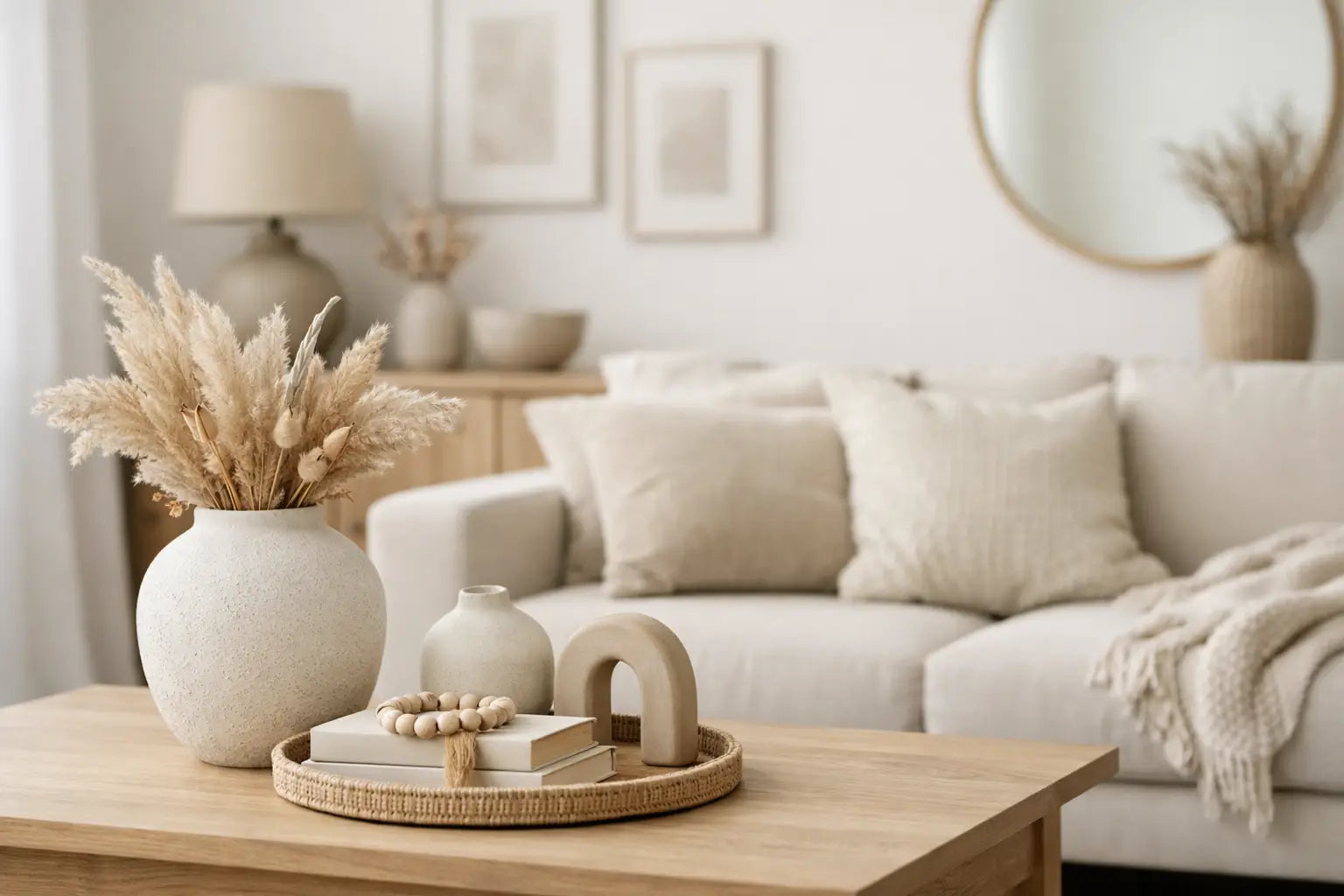
The living room benefits from texture because it is usually where comfort matters most. A coffee table or console is a natural place to start. Try combining one structured piece, such as a tray or bowl, with something softer and more organic like faux florals or a wreath nearby. The contrast keeps the arrangement feeling balanced.
Shelves are another opportunity. If styling looks too uniform, introduce woven storage, matte ceramics and natural-looking decorative pieces to break up hard lines. You want variation in height and finish, but still within the same gentle colour story.
In the kitchen and dining space
Kitchens can easily feel functional first and atmospheric second. Natural texture helps shift that balance. A wicker or seagrass tray, wooden serving pieces, ceramic jugs and softly coloured table linens bring warmth to worktops and open shelving without creating clutter.
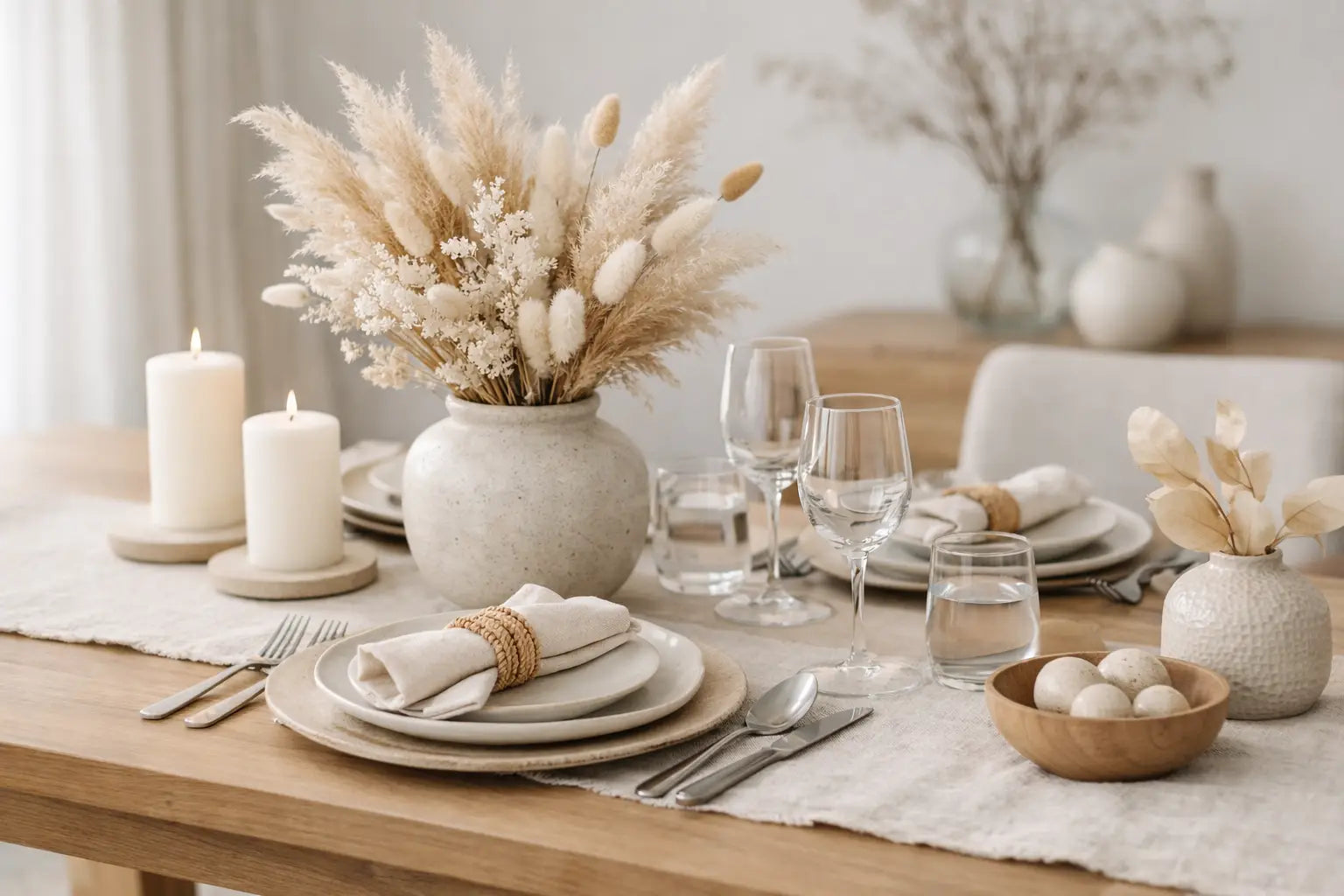
On the dining table, texture is often what makes everyday dining feel a little more special. A layered centrepiece with a tactile vase, seasonal stems and candlelight can look thoughtful while still feeling effortless. This is especially useful if you like to refresh your home with the seasons but want the overall look to remain cohesive.
In the hallway or entryway
Hallways are often overlooked, yet they set the tone for the rest of the home. A console styled with a lamp, a textured vase and a basket underneath feels calm and finished very quickly. Because these spaces are often smaller, even one or two natural elements can make a noticeable difference.
How to style natural texture home accessories without clutter
The main trade-off with texture is that it can tip from relaxed to busy if too many materials compete at once. The answer is not to avoid layering, but to edit carefully.
Start with a restrained palette. Natural textures tend to look best in soft neutrals, muted greens, warm taupes and chalky whites. When the colours are quiet, the mix of finishes can do more of the work.
Next, think in contrasts rather than quantity. A single woven piece beside a smooth ceramic object often has more impact than several textured items grouped together. The eye notices the difference more clearly.
Scale matters too. Small accessories can disappear if they all sit at the same height and have a similar finish. It helps to combine one larger anchor piece with a few smaller accents. A bowl, lantern or vase can set the structure, while stems, candles or decorative objects complete the arrangement.
It also helps to leave space. Texture needs a little breathing room to be noticed. If every surface is filled, the room can start to feel overworked rather than calm.
A timeless look with room for the seasons
One of the most appealing things about natural texture is how easily it carries through the year. It does not need to be packed away the moment the season changes. Instead, it forms a quiet base that you can adapt.
In spring, woven textures and soft ceramics pair beautifully with faux blossoms and lighter greens. In autumn, the same basket or wooden tray can be restyled with deeper tones, candles and gathered seasonal pieces. At Christmas, natural textures help festive styling feel elegant rather than overly shiny or themed.
This is where a consistent approach makes life easier. If your home accessories share a similar visual language, seasonal updates feel like small, thoughtful changes rather than a complete switch. That is often the difference between a home that feels composed and one that feels as though it starts from scratch every few months.
Choosing pieces you will still love next year
When shopping for texture-led accessories, it is worth asking whether a piece adds calm or simply adds detail. The best choices tend to do both a practical and aesthetic job. A storage basket, a serving tray, a ceramic jug or a faux arrangement can all bring beauty to a room while still being genuinely useful.
It is also wise to consider how a piece sits within your existing home. Natural texture is versatile, but tone still matters. Pale washed woods feel different from richer wood finishes. Tighter woven textures look more refined, while chunkier weaves feel looser and more rustic. Neither is better - it simply depends on the mood you want to create.
If your space already has strong pattern, darker paint or more traditional furnishings, a lighter touch may be enough. If your home feels clean-lined or slightly stark, texture can do much more of the heavy lifting. It depends on what the room is missing.
At Sable Homeware, this is very much the appeal of a carefully edited collection. You are not trying to force character into a room with statement pieces that date quickly. You are building warmth gradually, with accessories that feel easy to place and easy to live with.
Natural texture has a way of making a home feel more human. Not perfect, not overstyled, just gently balanced. If a room feels as though it needs something, but you cannot quite name what, texture is often the answer - quiet, versatile and lasting in all the right ways.