Minimal Christmas Home Decor That Feels Warm
When a room is already calm and softly layered, Christmas does not need to arrive in a box of bright clutter. Minimal christmas home decor works best when it feels like a natural extension of your home - softer lighting, fuller textures, a little more warmth, and a few thoughtful seasonal details that sit comfortably within your everyday style.
For many homes, that shift is what makes festive decorating feel more enjoyable. Rather than packing every surface with novelty pieces, a minimal approach gives each item space to be seen. The result is quieter, more elegant, and often far easier to live with through the whole season.
What minimal christmas home decor really means
Minimal does not have to mean stark. In a Christmas setting, it usually means editing with care. You might choose a smaller palette, repeat a few natural materials, and focus on pieces that add atmosphere rather than visual noise.
That could look like a wreath in muted greenery, a cluster of candles on the dining table, or faux winter stems gathered in a ceramic vase. The room still feels festive, but the effect is more settled than dramatic. If your home already leans towards soft neutrals, warm woods, woven textures, linen, or stoneware, this style tends to feel especially natural.
There is also a practical advantage. Decor that is restrained and cohesive is easier to move around, easier to store, and less likely to feel dated next year. That matters if you want your seasonal styling to feel timeless rather than trend-led.
Start with your existing palette
The easiest way to create a more refined Christmas look is to work with the colours and finishes already in your home. If your living room is built around oat, ivory, taupe, soft grey or muted brown, festive decor in the same family will feel immediately more cohesive.
This is where many people overcomplicate things. They assume Christmas needs a completely separate scheme, when often the most beautiful result comes from only adding one or two seasonal notes. Deep green, brushed gold, off-white and natural wood are often enough.
If you love a little contrast, use it sparingly. A touch of black in candle holders or ribbon can ground a soft arrangement beautifully. If you prefer a warmer look, brass, amber glass and natural foliage will keep everything feeling gentle. It depends on your home, but the principle stays the same - let the Christmas layer complement the room rather than compete with it.
Focus on texture before decoration
A minimal scheme becomes inviting through texture. This is what stops it feeling bare. Bouclé cushions, soft throws, woven baskets, ribbed glass, matte ceramics and natural greenery all add depth without adding fuss.
In winter, texture often does more than colour ever could. A simple arrangement of pine stems in a stoneware jug can feel richer than a brightly decorated display because it introduces shape, softness and seasonality all at once. The same applies to a dining table dressed with linen, ceramic serveware and candlelight. It is visually quiet, but far from plain.
This is especially useful if you are decorating an open-plan space. Too many distinct festive pieces can make the room feel fractured. Repeating texture across the area keeps everything connected.
Style the key areas, not every corner
One of the strengths of minimal christmas home decor is that it knows where to stop. Not every shelf, windowsill and side table needs a festive moment. In most homes, decorating three or four key zones will create more impact than scattering smaller items everywhere.
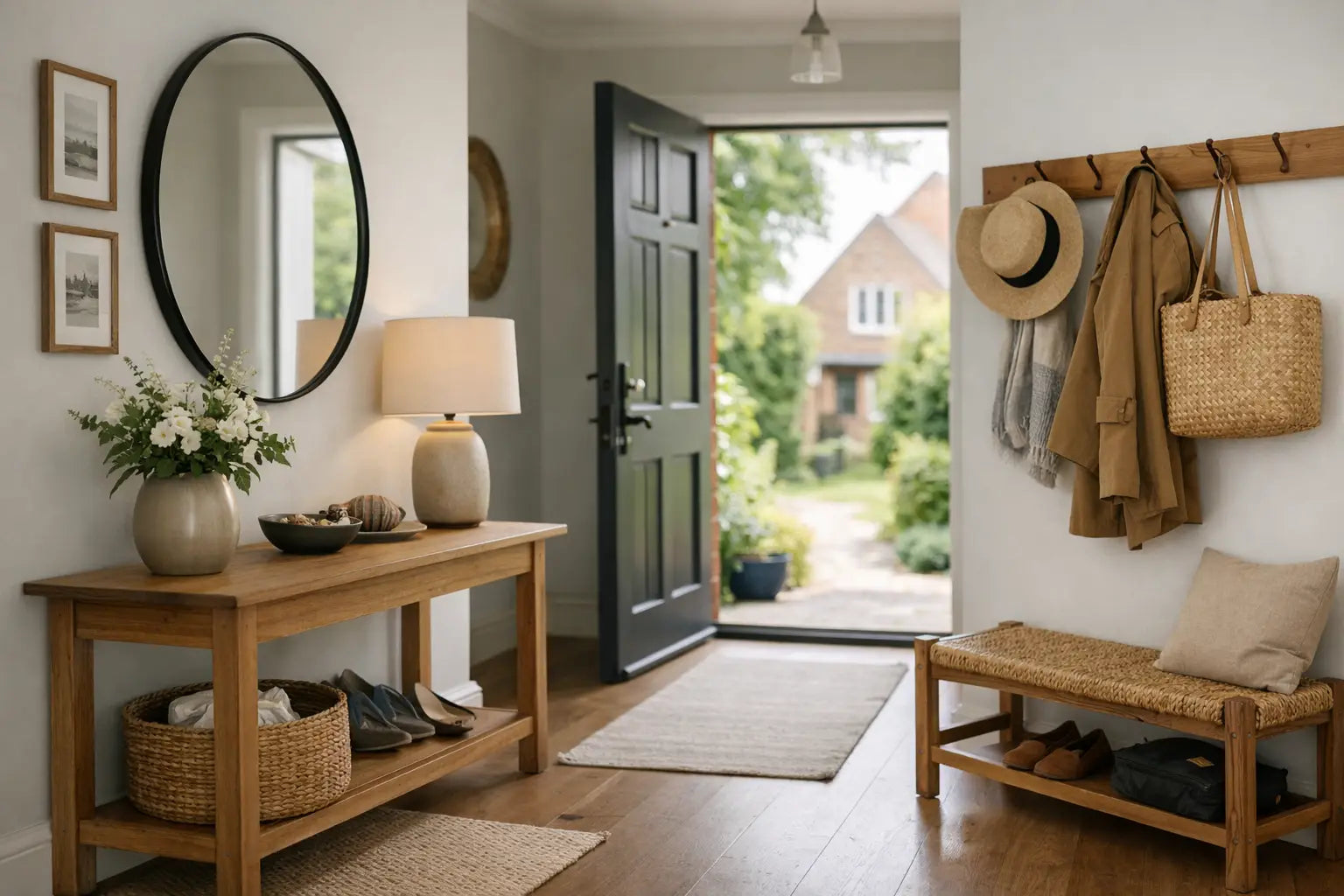
The front door or hallway sets the tone first. A wreath, a lantern, or a bowl filled with natural accents can be enough to signal the season without overworking the space.
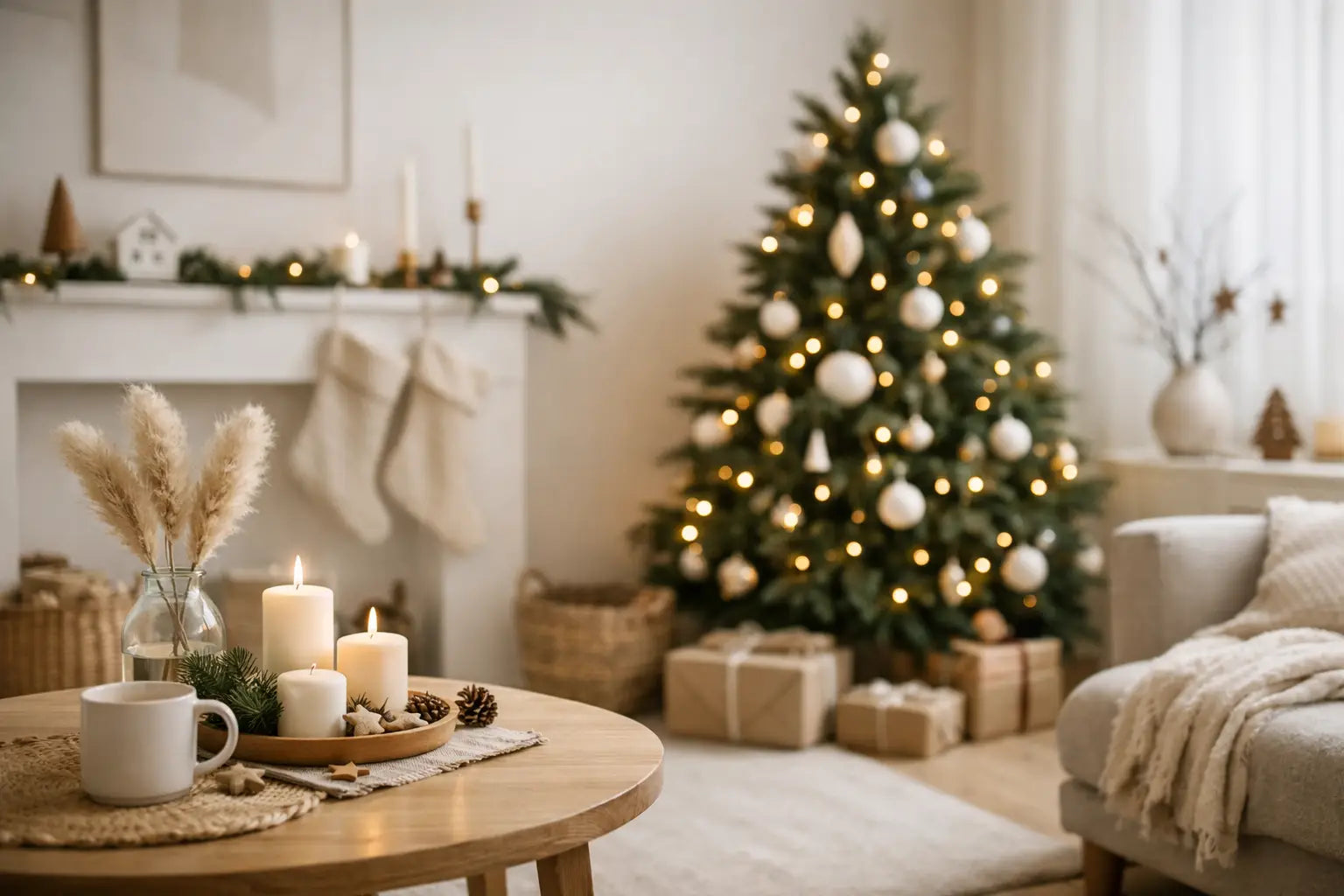
In the living room, the coffee table, mantel if you have one, and the area around the tree usually carry the look. Keep styling low and restrained so the room still feels comfortable for everyday use. A tray with candles and greenery, or a few sculptural ornaments alongside your usual decorative objects, often feels more polished than a complete festive takeover.
The dining table deserves attention because it naturally becomes a focal point through December. A runner, tapered candles, and a central arrangement of faux stems or seasonal foliage can carry both quiet family meals and more dressed-up gatherings. You do not need to restyle it from scratch each time.
A pared-back tree can still feel special
The tree is often where minimal intentions disappear. It is easy to keep adding. If you want a calmer look, begin by choosing a restrained palette and repeat it consistently.
Paper decorations, ceramic ornaments, wooden details, soft velvet bows or simple matte baubles all work beautifully in a minimal setting. Warm white lights are often enough to bring depth and atmosphere. You may not need tinsel, multicoloured ornaments and oversized picks unless your home genuinely suits a fuller, more playful style.
A more edited tree can also highlight the shape of the branches, which makes the whole arrangement feel more natural. If you prefer an abundant tree, keep the decoration simple and let volume come from the foliage rather than from lots of competing finishes. That balance often feels softer and more timeless.
Natural materials make the season feel grounded
There is a reason natural elements return every Christmas. They bring freshness, movement and a sense of quiet tradition that suits a minimal home beautifully. Greenery, pinecones, dried orange slices, wood, paper and linen all add seasonal character without feeling overdone.
Faux florals and stems can be particularly useful here, especially if you want a longer-lasting display that still feels organic. Styled well, they soften shelves, consoles and tables in a way that feels effortless. The key is not to overcrowd them. One generous arrangement often looks better than several smaller ones competing for attention.
Wreaths follow the same rule. A simple design with mixed foliage, soft berries or subtle texture usually feels more refined than anything too glittered or heavily embellished. In homes with a neutral palette, that restraint tends to look especially elegant.
Candles and lighting do most of the work
If there is one shortcut to a calmer festive home, it is lighting. Christmas styling always looks better when the room is lit softly. Candles, lamps, and warm tree lights create mood without adding anything visual that needs to be tidied away later.
This is why minimal decorating can feel so effective. It relies less on quantity and more on atmosphere. A small cluster of pillar candles on a tray, flanked by greenery or textured holders, can transform a console table. In the evening, even the simplest arrangement feels complete.
You can take the same approach in the kitchen or hallway, where decorative space may be limited. A candle beside a bowl of seasonal fruit or a small arrangement of stems can be enough. These quieter moments often feel the most welcoming because they fit naturally into daily life.
Choose pieces that can stay beyond December
One of the most appealing things about a restrained Christmas scheme is how much of it can remain in place after the festive peak has passed. Neutral candle holders, ceramic vases, woven storage, faux stems, table linens and simple wreaths often work well from late November through winter.
That makes decorating feel less wasteful and more deliberate. Instead of buying highly specific pieces that only suit one week of the year, you are investing in items that layer into your home more broadly. For a brand such as Sable Homeware, this kind of enduring styling is part of the appeal - seasonal updates that still feel timeless once the celebrations settle.
There is room for sentiment too. Minimal does not mean impersonal. Favourite ornaments, inherited decorations or festive pieces collected over time can still have a place. The difference is that they are used with intention, where they can be appreciated properly.
Keep it beautiful, but liveable
The best festive interiors are not only lovely to look at. They are easy to live in. If a hallway arrangement blocks the post, or a table centrepiece makes conversation awkward, it is probably doing too much.
A thoughtful Christmas home should support real life - hosting, cooking, slower evenings, family visits, and ordinary mornings with the tree lights on. That is often where minimal styling wins. It leaves enough breathing room for the season itself.
If your home feels calm, warm and gently festive, you have done enough. A few well-chosen details, repeated with care, will always feel more inviting than a room that asks to be admired from a distance. Let the season settle into your space softly, and it will feel all the more special for it.