A Guide to Neutral Living Room Accessories
A neutral living room rarely falls flat because of the wall colour or the sofa. More often, it is the finishing layer that decides whether the space feels calm and complete or simply unfinished. This guide to neutral living room accessories is about that final layer - the pieces that bring warmth, texture and quiet interest without disturbing the sense of ease.
The appeal of a neutral scheme is its longevity. Soft beige, stone, oat, ivory and muted taupe create a backdrop that feels restful and adaptable through the seasons. Yet a room built entirely on one note can feel cold if every surface is smooth and every tone matches too closely. Accessories are what give a neutral room its depth. They soften edges, introduce contrast and help a space feel lived in rather than staged.
What makes neutral accessories work
The most successful neutral living rooms are not built around sameness. They rely on variation within a restrained palette. A linen cushion against a brushed cotton throw, a ribbed ceramic vase on a wooden console, a softly tinted candle beside a woven tray - these subtle shifts are what make the room feel layered.
That is why choosing accessories for a neutral space is less about filling gaps and more about balancing materials, shapes and tones. If everything is pale, the room needs darker grounding notes such as aged wood, smoked glass or deeper taupe. If everything is matte and soft, it may benefit from a little light reflection through glazed ceramics or glass candle holders. The goal is not contrast for its own sake, but a gentle rhythm that keeps the eye moving.
A guide to neutral living room accessories by layer
A thoughtful room tends to come together in layers, rather than all at once. Starting with the larger, softer pieces often makes the smaller decorative details easier to place.
Textiles that add warmth
Cushions and throws do much of the visual work in a neutral living room. They are also one of the easiest ways to shift the mood without changing the furniture underneath. The key is to mix fabrics that feel natural and tactile. Washed cotton, linen-look weaves, boucle, soft wool blends and subtle embroidery all bring character while staying within a calm palette.
Try not to match every cushion exactly. A more relaxed arrangement usually comes from combining related tones rather than identical ones. Think ivory with oat, sand with mushroom, or soft grey-beige with warmer biscuit shades. If your sofa is pale, a few slightly deeper cushions can stop it feeling washed out. If the sofa is already mid-tone, lighter accessories will lift it.
Throws should feel effortless rather than overly arranged. A casually folded throw over one arm of a sofa or draped across the end of a chair adds softness immediately. In warmer months, lightweight textures keep things airy. In autumn and winter, chunkier knits and brushed finishes bring more comfort. This seasonal swap works particularly well in a neutral room because the palette stays consistent while the texture changes.
Ceramics and vessels with quiet presence
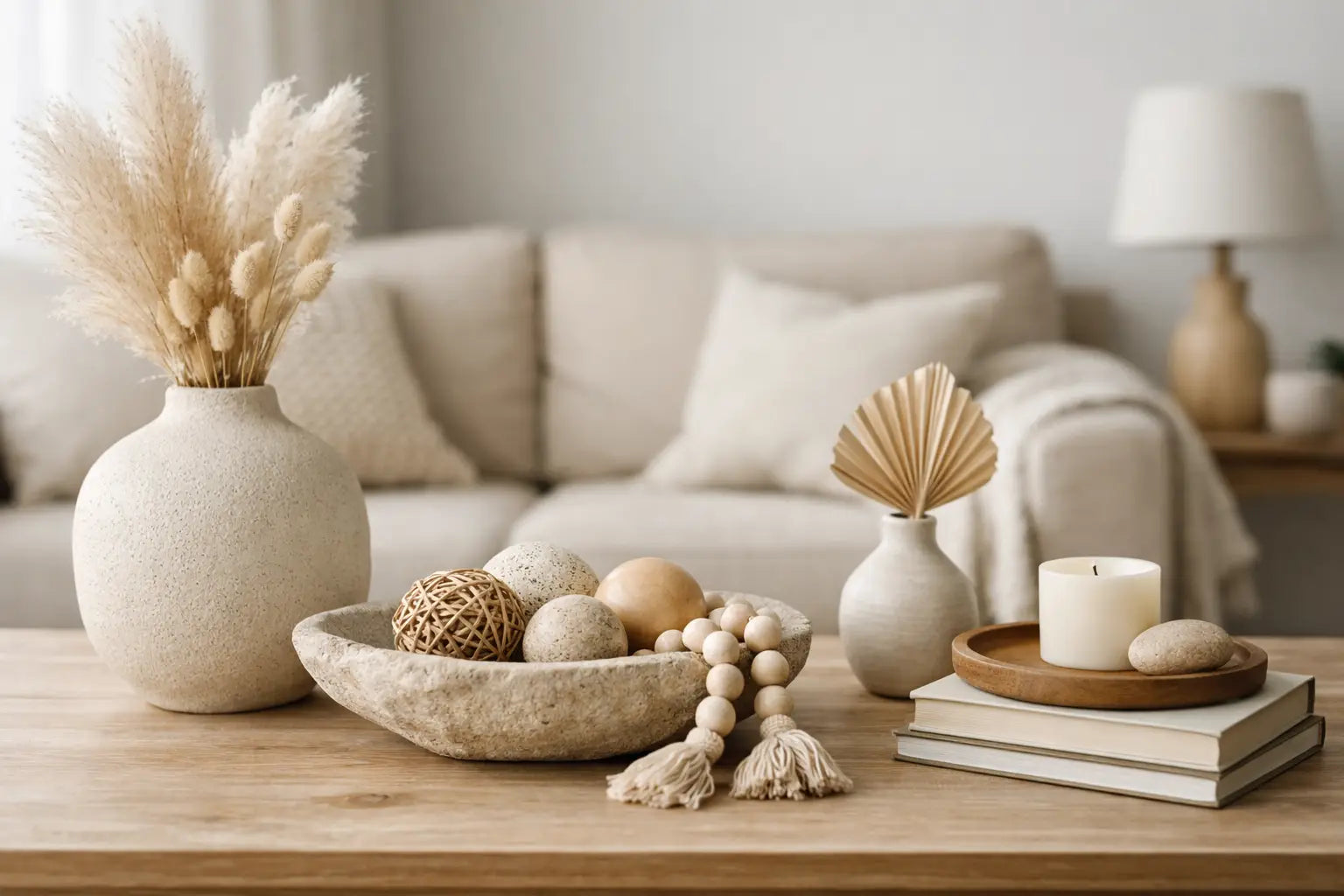
Decorative vases, bowls and pots are often the pieces that make a room feel collected. In a neutral scheme, ceramics with organic shapes are especially useful because they add interest without relying on strong pattern or colour. Look for matte finishes, stone-inspired glazing, gentle ridges and hand-finished details that feel slightly imperfect in the best way.
A single larger vase can be more effective than several small ones, particularly on a coffee table or sideboard. It gives the arrangement presence and keeps the overall look clean. Grouping works too, but only when there is enough variation in height and form. Three pieces in similar tones but different silhouettes often feel more refined than a crowded cluster.
Faux florals or dried stems can soften these harder materials beautifully. The best neutral arrangements tend to lean towards muted greens, soft creams and natural seed heads rather than anything overly bright or artificial-looking. They should add movement and life, not compete for attention.
Candlelight and ambient detail
There is a reason candles appear in so many calm interiors. They bring softness in a way few other accessories can. Even when unlit, a well-chosen candle or holder adds texture and shape. In the evening, that low glow shifts the entire room.
For a neutral living room, keep candle styling tonal and simple. Stoneware holders, clear glass, ribbed jars and soft wax shades all sit comfortably within the scheme. Varying the height of candle holders adds structure, especially on a mantelpiece or console. If you prefer scented options, choose fragrances that mirror the room's mood - clean linen, fig, cedar, soft florals or gentle spice depending on the season.
Lanterns and tealight holders can work in the same way, but scale matters. One oversized lantern may feel too dominant in a smaller room, while a pair of understated holders can create warmth without clutter.
Styling surfaces without making them busy
The challenge in neutral interiors is rarely finding beautiful accessories. It is knowing when to stop. Because the palette is soft, it can be tempting to keep adding more in search of interest. Usually, a better result comes from fewer pieces with more texture and presence.
Coffee tables
A coffee table looks most balanced when it has a mix of heights and materials. A tray is useful because it gives smaller objects a sense of order. On top, you might place a candle, a ceramic vessel and one decorative object, leaving enough space for the table to remain practical. If the table already has a heavy visual weight, keep accessories lighter and more sculptural.
Books can work well here too, especially if the covers sit comfortably within the room's palette. They add height and help anchor smaller decorative pieces. The key is restraint. One thoughtful arrangement feels calmer than several disconnected ones.
Shelves and consoles
Shelves benefit from repetition, but not strict symmetry. Repeating a material such as ceramic, glass or woven texture ties everything together, while changing the height and shape stops it feeling flat. Leave breathing space between objects. Empty space is part of the styling.
On a console, a lamp, a vase and a small tray often give enough variation without creating clutter. If the wall above is plain, a mirror or framed print can complete the setting, but the accessories below should still feel edited.
Choosing the right tones for your room
Not all neutrals sit happily together. Some lean creamy and warm, while others carry cooler grey undertones. Mixing them can look beautiful, but only when done deliberately. If your room has warm flooring, beige upholstery or brass details, warmer accessories usually feel more natural. If the room includes cooler stone, black accents or grey-toned fabric, a blend of chalk, putty and soft grey-beige may sit better.
Natural light changes everything as well. A north-facing living room can flatten pale accessories if there is not enough tonal contrast, so slightly richer shades such as mushroom or camel may help. In a brighter south-facing room, lighter layers often feel airy and fresh. This is where a deliberate approach matters more than trend-led buying. Pieces should suit the room you actually have, not just the image you liked at first glance.
The accessories worth investing in
If you are building a neutral living room gradually, it helps to focus on pieces that can move easily around the home. A beautiful vase, a textured throw, a timeless tray or a set of candle holders can work in the living room now and elsewhere later. That flexibility makes them feel lasting.
It is also worth investing a little more in accessories that are used every day or seen from every angle. Cushions that hold their shape, ceramics with a tactile finish and storage pieces that blend practicality with style all make the room feel more polished. Less successful purchases tend to be the filler items - objects bought simply because a shelf looked empty.
This is where a carefully edited collection can make styling much easier. Brands such as Sable Homeware work well for neutral interiors because the pieces are designed to sit together naturally, which removes a lot of guesswork.
A room that feels calm, not cautious
The best guide to neutral living room accessories is not really about rules. It is about learning to notice what gives a room warmth, softness and shape. A neutral space should never feel afraid of personality. It simply expresses it in a quieter way - through texture, tone, natural materials and pieces chosen with care.
If your living room already has a calm foundation, you do not need more for the sake of it. You may only need a woven tray, a softer cushion mix or a vase with more presence. Small changes, when they are thoughtful, are often enough to make the whole room feel beautifully settled.