How to Style a Dining Table Beautifully
A dining table rarely needs much to feel special. More often, it needs less - but chosen well. If you have ever wondered how to style a dining table so it feels warm, balanced and beautifully put together without looking overdone, the answer usually lies in a few thoughtful layers rather than one dramatic statement.
The most inviting tables are not styled to within an inch of their lives. They feel lived in, softly arranged and easy to sit around. Whether you are dressing the table for everyday family meals, a relaxed lunch with friends or a seasonal update, the goal is the same: create something that feels calm, practical and in keeping with the rest of your home.
Start with the shape and scale of the table
Before adding anything decorative, take a moment to consider the table itself. A long rectangular dining table can carry more length and repetition, while a round table usually looks better with a central arrangement that keeps everything feeling contained. A smaller table may only need one focal point, whereas a larger table can hold a few grouped elements without feeling empty.
Scale matters more than people often expect. Pieces that are too small can look scattered and hesitant, while oversized styling can make the table feel crowded. As a guide, leave enough visual space for the table to breathe. You want the arrangement to complement the furniture, not compete with it.
This is also where practicality comes in. If your dining table is used daily, styling should never become an obstacle. There is little point in creating a lovely arrangement that needs to be moved every time someone sits down for supper.
How to style a dining table with a simple base layer
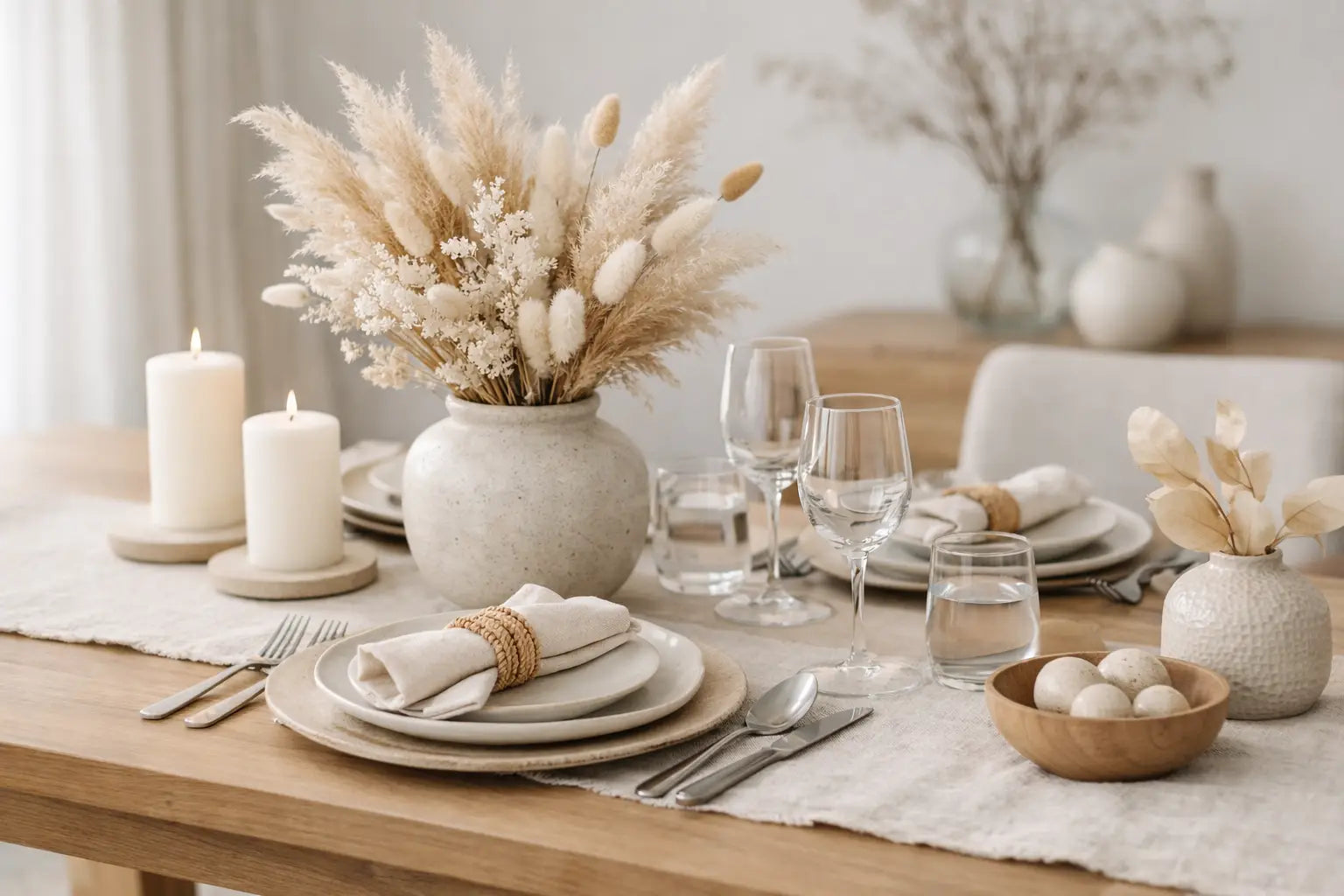
A base layer helps the whole arrangement feel intentional. This might be a runner in a soft neutral, a linen cloth, woven placemats or even a large shallow tray that anchors everything in one area. The best starting point depends on the mood you want.
For a softer, more relaxed look, linen works beautifully. It brings gentle texture and movement, especially in natural shades such as oat, stone or warm white. If you prefer something a little more structured, a tray can create order and make everyday styling easier to lift away in one go.
There is no rule that says every dining table needs fabric. A beautiful wooden table often benefits from having some of its surface left visible. In that case, a runner with open space on either side can feel more refined than a full tablecloth.
Choose one clear focal point
When people struggle with table styling, it is often because too many pieces are trying to lead. A dining table usually needs one main idea. That could be a vase of faux florals, a bowl filled with seasonal stems or fruit, a cluster of candle holders, or a low arrangement of decorative objects with varying heights.
Low styling tends to work best in dining spaces because it keeps the table sociable. Anything too tall can interrupt sightlines and make conversation feel oddly formal. There are moments when a taller arrangement suits the room, particularly on a table that is being styled purely for display, but for everyday living, lower and wider is usually the more comfortable choice.
Natural materials help a focal point feel timeless. Ceramics, glass, wood and woven textures sit particularly well within a calm, neutral home. They add interest quietly, without pulling the whole room towards something trend-led or overly styled.
Build in layers, not clutter
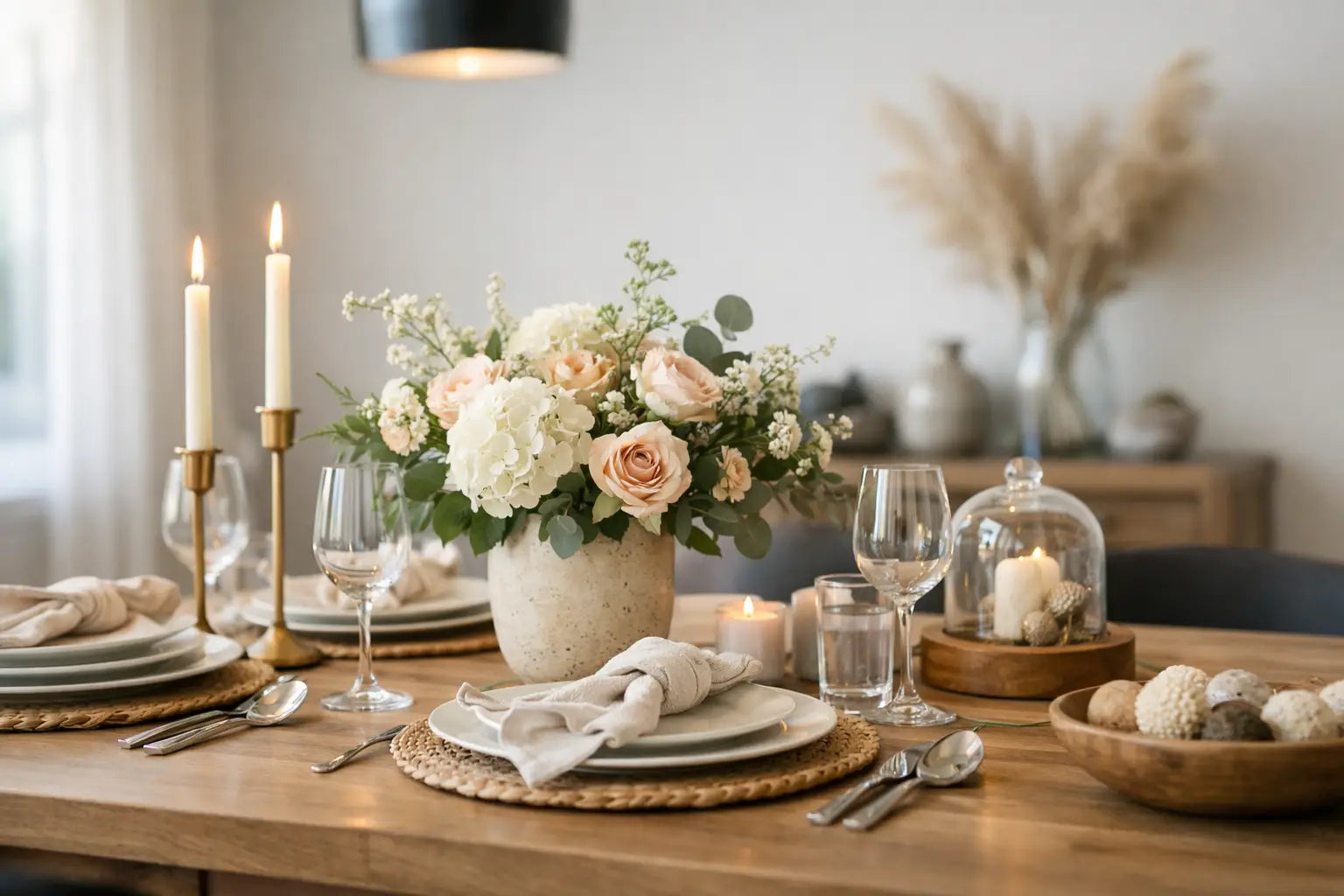
Once your focal point is in place, the rest is about gentle support. This is where a dining table begins to feel collected rather than bare. A few candle holders beside a vase, a small stack of bowls, or a decorative bead garland loosely placed on a tray can all add depth.
The key is variation. Contrast smooth with textured, tall with low, matte with reflective. A ceramic vase beside ribbed glass candle holders, for example, feels richer than three pieces in the same finish. Layering is less about quantity and more about balance.
Editing matters here. If everything is beautiful, nothing stands out. Step back and remove anything that feels fussy or repetitive. Often the final arrangement looks better after one piece has been taken away.
Let texture do the work
In a neutral scheme, texture is what stops a dining table from feeling flat. Soft linen, glazed ceramics, aged metal, woven rattan and realistic faux foliage all bring quiet contrast. They create depth without relying on strong colour.
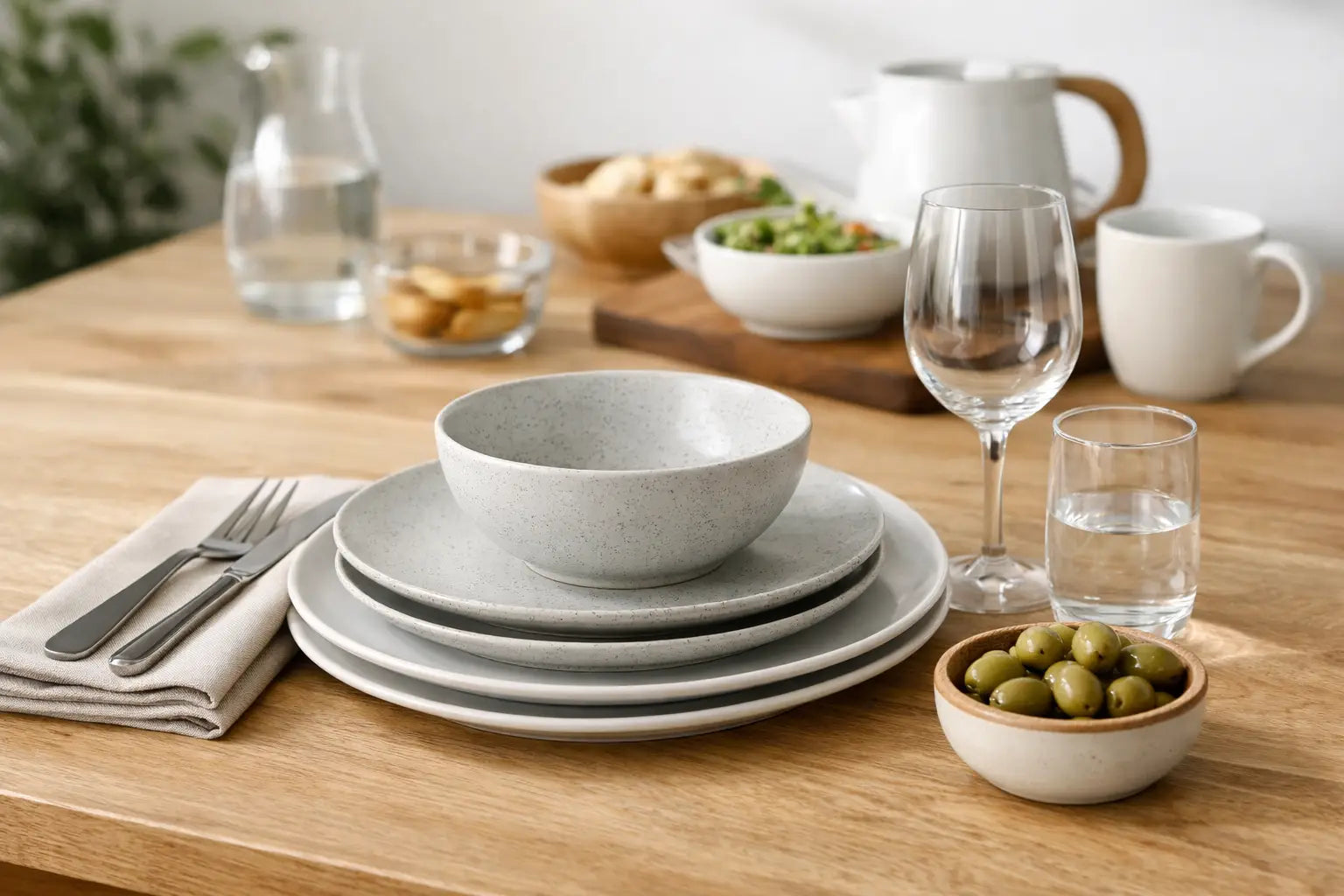
This is especially useful if your home leans towards soft, earthy tones. Rather than introducing bright accents for the sake of interest, use materials that catch light differently and bring subtle movement. A stoneware bowl, a woven placemat and a glass votive can sit within the same palette while still feeling layered.
Texture also helps styling feel more seasonal without needing a complete change. In spring and summer, lighter fabrics and fresh greens can lift the table. In autumn and winter, deeper candlelight, wood tones and fuller foliage create warmth. The palette can remain cohesive while the mood shifts gently with the time of year.
How to style a dining table for everyday use
Everyday styling should feel easy to live with. That usually means keeping the centre of the table clear enough for serving dishes, school projects, post or a quick cup of tea. A compact arrangement in the middle often works best, especially if it can stay in place when the table is in use.
A tray is particularly helpful here. It keeps candles, a vase and smaller accessories grouped together, and it gives the arrangement a sense of purpose. It also makes the table feel tidier, because there is a defined boundary rather than separate objects drifting across the surface.
For everyday homes, less really is more. One vase with stems, a pair of candle holders and a bowl can be enough. There is no need to fill every inch. A restrained arrangement often feels more luxurious than a busy one.
Styling for hosting feels slightly different
When styling for guests, the table can become a little more expressive, but comfort still matters. If the meal is the focus, keep centrepieces low and ensure there is room for place settings, serving dishes and glasses. A beautifully laid table should never make people feel nervous about moving anything.
This is where repetition can be very effective. Matching candle holders running down the centre, coordinated napkins, or repeated natural elements such as foliage or bud vases create rhythm and elegance. The effect feels polished without becoming formal.
You do not need a completely different collection of pieces for hosting. Often it is simply a matter of adding to your everyday base. Extra candles, a fuller floral arrangement or better table linen can shift the table into occasion mode while keeping the overall look consistent with your home.
Use seasonal touches with restraint
Seasonal dining table styling can be lovely, but it works best when it still feels like your home. Instead of switching to something theme-heavy, bring in subtle references through texture, foliage, colour and materials.
In spring, that might mean soft green stems, pale ceramics and a lighter linen runner. In autumn, consider richer neutrals, amber glass and natural wood. At Christmas, candlelight, gentle metallics and layered greenery often feel more enduring than novelty pieces.
A restrained seasonal update tends to last longer too. It feels elegant for weeks rather than overly specific for a single moment. That is often the sweet spot for a table you want to enjoy every day.
A few common mistakes to avoid
The most common mistake is choosing pieces that are too tall, too small or too numerous. Another is styling without considering the room around the table. Your dining table should speak to the wider space - the tones in your kitchen, the textures in nearby furniture, the mood of the home overall.
It is also easy to default to symmetry when what the table really needs is softness. Perfectly mirrored arrangements can work in formal interiors, but in a relaxed home they may feel stiff. A little asymmetry can make the table feel more natural and welcoming.
Finally, avoid styling that feels disconnected from real life. If you know the table is used constantly, choose pieces that are sturdy, easy to move and simple to maintain. Beautiful homes are easier to enjoy when they are not precious.
For those drawn to a calm, layered look, Sable Homeware’s approach is a useful one to keep in mind: choose fewer pieces, favour natural texture, and give each one room to be noticed.
A well-styled dining table does not need to be elaborate to feel memorable. Often the most beautiful arrangements are the quietest ones - a soft runner, a gathered vase, the glow of candlelight, and just enough space left for everyday life to happen around them.