Home Decor Trends 2026 That Will Last
A home that feels calm is no longer a nice extra. It is the brief. The most interesting home decor trends 2026 are moving away from fast visual impact and towards something gentler - rooms that feel layered, useful and quietly beautiful to live in every day.
That shift will feel familiar to anyone who has grown tired of interiors that look striking for a month and dated by the next season. What is changing now is not just colour or shape, but mood. Homes are becoming softer, more grounded and more personal, with decoration used to create ease rather than noise.
Why home decor trends 2026 feel softer
There is a clear move towards interiors that restore rather than impress. That does not mean homes are becoming plain. It means styling is becoming more intentional, with fewer hard contrasts, fewer overly polished finishes and more pieces chosen for warmth, texture and longevity.
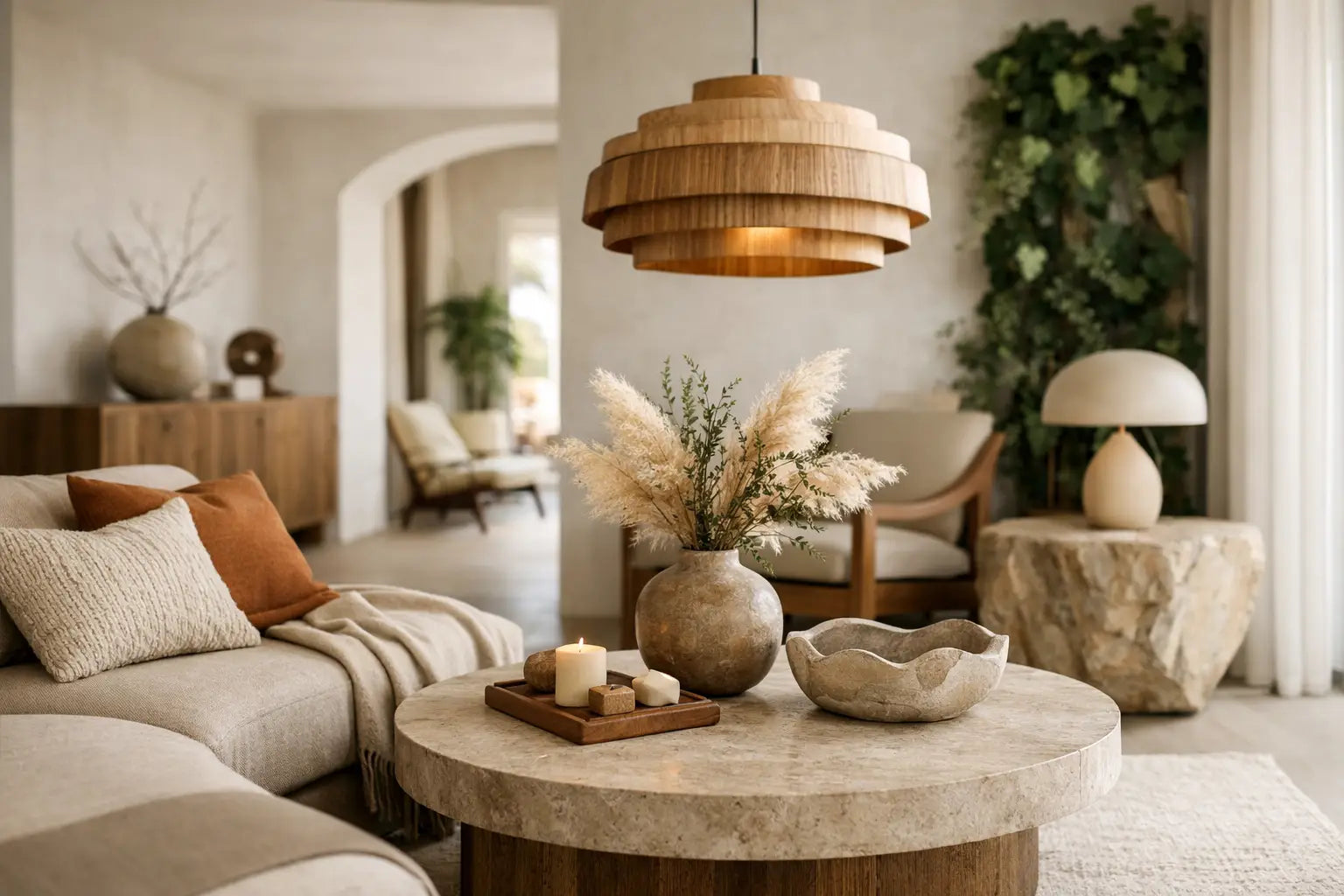
In practice, this looks like neutral schemes with depth instead of flat minimalism. Think chalky ceramics, linen-effect textiles, warm woods, woven storage and decorative accents with an artisanal feel. The overall look is still refined, but it is less rigid than the pared-back styles that dominated for years.
This is also where trend and timelessness finally meet. Many of the strongest looks for 2026 are not dramatic departures. They are thoughtful evolutions of what people already know they enjoy living with.
The home decor trends 2026 worth bringing in now
Warm neutrals are replacing cooler minimalism
Grey-led interiors have been softening for some time, and 2026 will push that further. The new neutral palette is warmer, creamier and more layered. Stone, oat, sand, putty, mushroom and soft taupe are taking the place of stark white and cooler tones.
The appeal is obvious. These shades are easier to live with, easier to style seasonally and more forgiving in rooms that need to feel relaxed rather than pristine. They also work beautifully with natural materials, which is why they tend to make a home feel cohesive very quickly.
The trade-off is that warm neutrals need variation to avoid looking flat. Texture matters more than ever here. If your palette is quiet, the interest needs to come from finish, shape and contrast in material.
Texture is becoming the real statement
In 2026, texture will do much of the work that bold pattern or strong colour used to do. Ribbed glass, reactive glaze ceramics, woven baskets, soft-touch candles, faux stems with natural movement and layered textiles all bring richness without making a room feel busy.
This is particularly useful for anyone who wants a home to feel styled but not overdone. A cluster of vases in varied finishes, a wreath with a looser organic shape, or a dining table layered with linen-look runners and tactile serveware can transform a space without needing a dramatic centrepiece.
Texture also photographs beautifully, but more importantly, it creates depth in real life. That matters in homes where people want comfort, not just a polished image.
Decorative storage is becoming part of the room
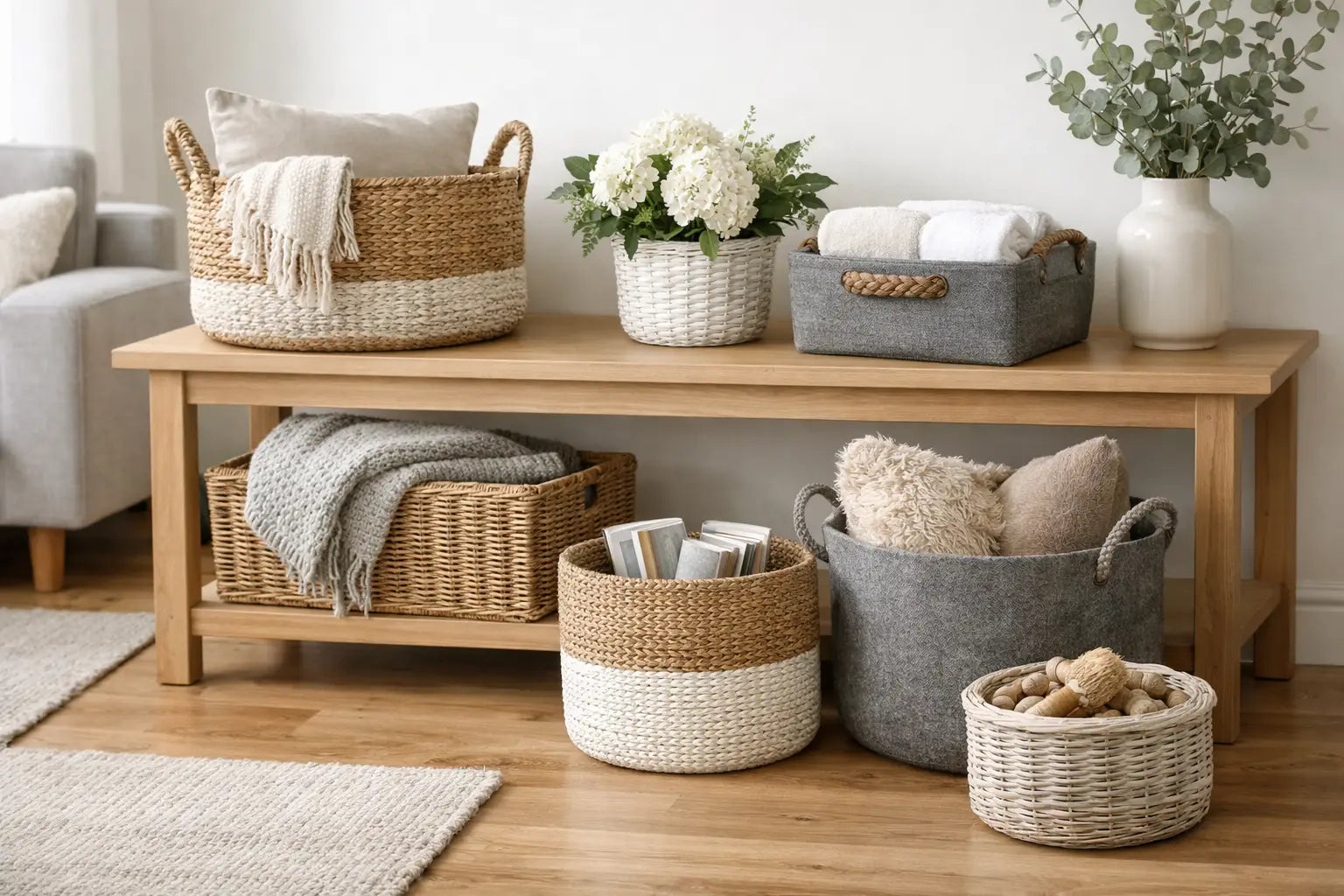
One of the more practical home decor trends 2026 is the rise of storage that contributes to the room rather than disappearing into it. Baskets, lidded boxes, trays and open shelf accessories are being chosen as part of the styling story.
This reflects the way people actually live. Most homes need functional pieces in plain sight, especially in kitchens, hallways and living spaces. The difference now is that those essentials are expected to feel coordinated with the rest of the room.
The best versions are simple and natural-looking. Woven finishes, soft wood tones and subtle shapes tend to blend well across seasons, which makes them a more enduring investment than trend-led organisers in louder colours or novelty forms.
Dining spaces are becoming more styled, even when everyday life is busy
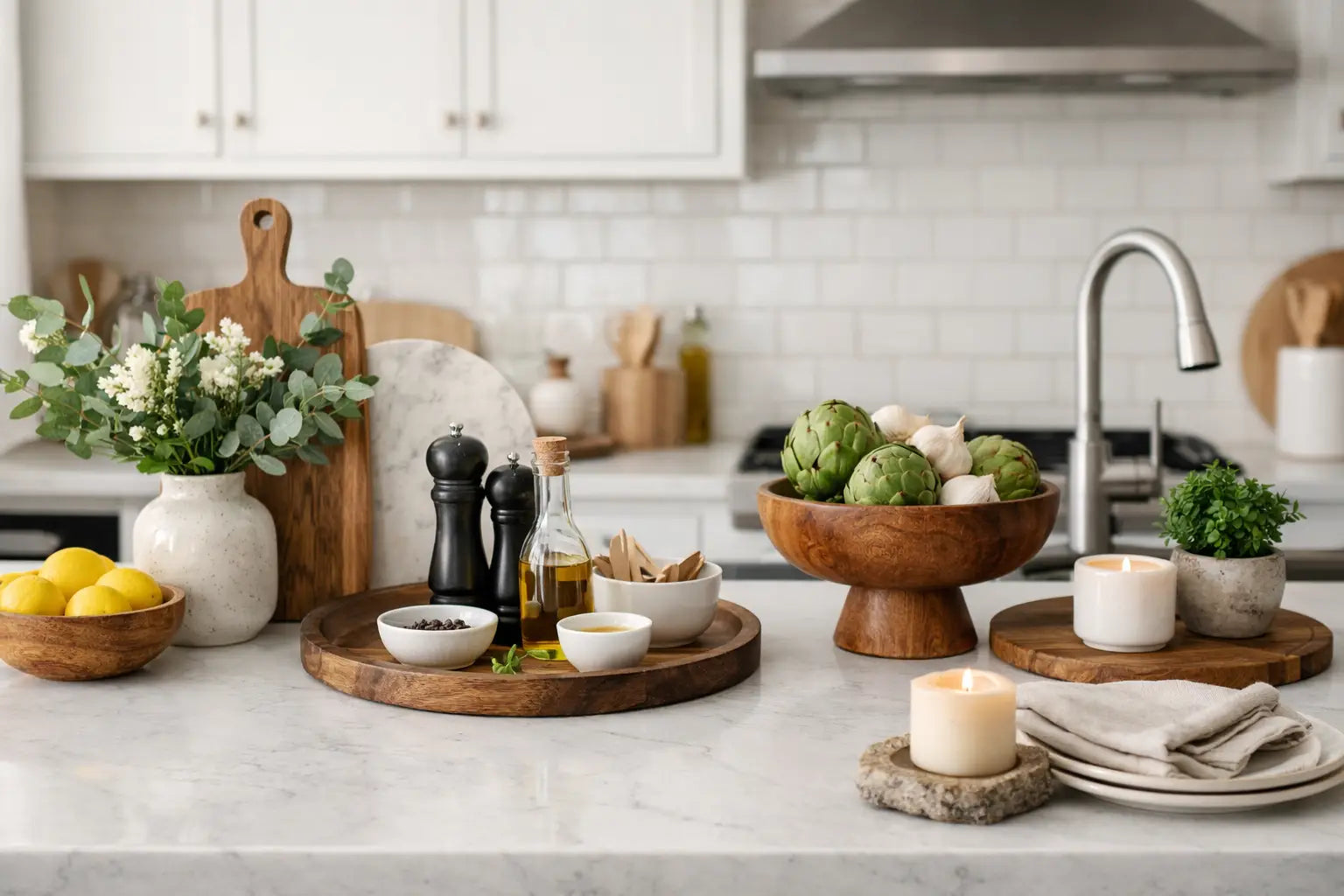
There is a renewed focus on the table as a visual and emotional centre of the home. Not every household is hosting elaborate dinners each week, but many people still want the dining table or kitchen island to feel put-together.
That means tableware and decorative accents are becoming more layered and more versatile. Sculptural candle holders, soft neutral placemats, ceramic serving bowls and faux florals that can stay in place between occasions all help a dining space feel complete.
What matters most is flexibility. Pieces that work for a quiet weekday supper, a Sunday lunch and seasonal gatherings will feel far more relevant in 2026 than anything too theme-specific or formal. This is where a tonal approach is especially helpful. When colours and finishes sit comfortably together, the table can be refreshed with very little effort.
Faux florals are looking less artificial and more seasonal
Faux botanicals continue to improve, and that is changing how people use them at home. In 2026, the preference is for stems and wreaths with a looser, more natural silhouette rather than tightly arranged bunches that look obviously decorative.
This is not about trying to fool anyone into thinking they are fresh flowers. It is about bringing softness, shape and seasonality into a room in a low-maintenance way. A few well-chosen stems in a textured vase or a wreath with subtle tonal variation can shift the mood of a shelf, console or dining table immediately.
The key is restraint. One generous arrangement often works better than several smaller ones scattered around the room. Choosing botanicals in muted greens, creamy whites and earthy tones will also help them sit more naturally within a calm interior.
Seasonal styling is becoming more refined
Seasonal decorating is not going anywhere, but it is becoming less novelty-led and more integrated with the home. Rather than switching to an entirely different look for spring, autumn or Christmas, people are choosing edits that sit within their existing palette.
This is one of the most useful changes to emerge from home decor trends 2026. It allows seasonal updates to feel elegant instead of excessive. A spring wreath in soft greens, autumn accents in warm brown and rust, or Christmas details in muted gold, cream and natural wood can all feel distinctive without disrupting the overall look of the room.
For shoppers who want their homes to feel special through the year but still cohesive, this is a welcome shift. It encourages a more deliberate collection of pieces that can return year after year.
How to bring 2026 trends into your home without chasing them
The easiest way to approach new-season interiors is to focus on atmosphere first. Ask what you want a room to feel like before deciding what it needs. If the answer is calmer, warmer or more welcoming, your updates should support that rather than compete for attention.
Start with foundational pieces that influence the mood of a space - textured vessels, candles, trays, storage and soft decorative details in a gentle palette. Then add seasonal or trend-led elements in smaller ways. This keeps your home feeling current without committing to something that may date quickly.
It also helps to style in groups rather than isolated items. A console table, shelf or dining table tends to look more intentional when pieces relate through material or tone. That does not mean everything should match, only that there should be a clear rhythm. At Sable Homeware, that sense of coordination is part of what makes styling feel less overwhelming.
If there is one caution for 2026, it is not to mistake softness for sameness. Calm interiors still need contrast. A woven basket beside glazed ceramics, matte candle holders against a polished tray, or faux stems with movement placed in a structured vase will keep a room from feeling too safe.
What these trends mean for real homes
The most enduring interiors are rarely built around a single fashion moment. They evolve through layers, seasons and small decisions made well. That is why the strongest trends for 2026 feel so appealing. They are not asking you to start again. They are asking you to edit more thoughtfully.
For some homes, that may mean warming up a cooler palette. For others, it may mean replacing clutter with a few better-chosen decorative pieces. If you love a cleaner look, texture can add softness without adding fuss. If you enjoy seasonal styling, refined accents can make the home feel fresh while still recognisably yours.
The best rooms next year will not be the loudest ones. They will be the ones that feel settled, welcoming and easy to live in. If a trend helps create that, it is worth paying attention to. If it does not, it is perfectly fine to leave it behind.
A beautiful home in 2026 will be less about keeping up and more about choosing pieces that bring warmth, calm and quiet confidence to everyday spaces.